Author Archives: Roofers Guild

How To Generate Exclusive Metal Roofing Leads


Metal Roofing Leads

Niching down your roofing company to a specialized service offering like metal roofing is a great way to differentiate your business from local competitors.

However, when restricting yourself to a specific segment of the marketplace, it’s important to create a process for acquiring customers that fit this bill.


Logo

Key Takeaway

Roofers focusing on metal roof repair, installation, and maintenance must establish a reliable method to generate metal roofing leads.


As one of the most trusted resources for roofing contractors across the United States, Roofer’s Guild knows first-hand what it takes to create an effective lead generation system.

Our system uses various marketing strategies to produce exclusive metal roof leads. We share those with you below:


Components of a Metal Roofing Lead Generation System

Whoever you buy leads from uses a process to generate those leads. As a metal roofing contractor, you should ask yourself, how do I implement their strategy for my brand?

If you can successfully master this system, you won’t need lead brokers or sellers. Instead, you will intercept their leads at the source and cut them out of the financial loop.


Here’s how you do it:


Organic SEO

The best way to generate metal roof leads is through organic SEO. You can get leads when users type in terms like metal roofing near me or metal roofing services into Google.

The results are a combination of Google Ads, Google Maps, and organic search results. Your website can rank in the organic search results and garner regular clicks for related keywords.

In addition, optimizing your website helps you generate consistent leads.


Organic SEO for Metal Roofing Website


Local SEO

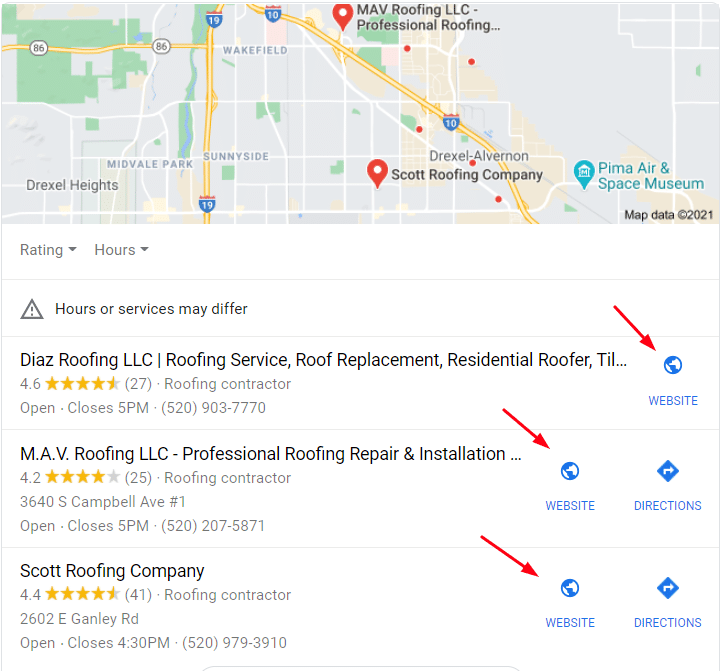
Another great way for roofers to get metal leads is to rank in Google’s Local Map 3-Pack. You achieve this by optimizing your Google My Business listing and generating customer reviews.

As you gain more reviews and optimize your profile, you begin satisfying the three local ranking factors: relevance, prominence, and proximity.

In addition to helping your GMB profile rank on the Map 3-Pack, reviews also help you convert potential customers. Using local SEO software to automate review requests can make a big difference.


Local SEO Ranking for Metal Roofer

Google Ads (Pay-Per-Click)

Running PPC ads is another way to get roofing leads for your local company. You can bid on groups of keywords relating to metal roofing, both commercial and residential.

While Google Ads yields fast leads, it does cost more than SEO to implement and sustain. In contrast to SEO, PPC ads cost money every time users click on an ad, whether they convert or not.

Still, PPC can be a beneficial factor when looking to generate metal roof leads.


Types of Metal Roofing Leads 

There are several variations of metal roofing leads, each holding different values for roofing companies. For instance, shared leads hold lesser value because multiple companies get alerted of the prospect.

Conversely, exclusive roofing leads have greater value because only your company gains access to the prospective client. Of course, value is demonstrated in pricing, though there are ways to generate leads for free, as well.


Exclusive Leads

Exclusive leads give a single roofing company access to the future client. Exclusive leads convert better because of the lack of competition and the fact that the consumer demonstrated interest in your brand rather than a 3rd party platform.

You can buy exclusive leads from 3rd parties, but they will cost much more than shared leads from the same providers. However, you reserve the option to generate exclusive leads from your own branded efforts, which Roofer’s Guild can help you with.


Shared Leads

Shared leads are the worst type because they convert less than any other variation. Metal roofing companies should avoid shared leads if possible because they cause more trouble than they’re worth.

Furthermore, shared leads don’t help sustain your roofing business long-term. While getting some quick jobs might seem wise for startup companies, the reality is that those consumers will not seek you the next time they need work done.

In their mind, you are simply a contractor for the lead broker brand, whom they trust.


Free Leads

Free leads can be good or bad, depending on their nature. A lead given to you from a friend or relative is often hit or miss but can help your business. Referrals are one of the best ways to grow your roofing company long-term.

However, word-of-mouth leads also come with their downside. Some people aren’t serious about using your company, and others don’t understand the problems with their roofing system to begin with, making them less likely to invest in a serious project.

Never trust free leads advertised online since there’s almost always a catch. Of course, if you generate leads through your website, they are free, in a sense.


Guaranteed Leads

Guaranteed metal roofing leads are a myth. The only guarantee you can have is to speak with the customer, which doesn’t mean you service their home or property.

The reality is that having multiple lead generation platforms can help sustain your roofing business. However, as you know, there are no guarantees in the roofing business.

You can do your part by investing in the most appropriate lead sources and doing great work on your performance. Eventually, you won’t need any guarantees because your business will thrive in the market.


Long-Term Benefits of Metal Roofing Leads

Creating a lead generation system for metal roofing jobs is a gift that keeps on giving. When using the techniques described above, you will increase sales and revenue without investing more money.

The key to reaching your lead generation goals is to take the time and effort required to create an effective system.

Distancing yourself from 3rd-party lead sellers refocuses your efforts on your own brand and contributes to the long-term success of your business with consistent metal roofing leads.


The Roofing SEO Guide for Dallas, TX (w/Fresh Tips for 2024)


Dallas Roofing SEO

Dallas roofers looking to invest in SEO should understand its principles before committing to an SEO agency or firm. For example, roofing companies may find themselves in an unfavorable long-term contract with an agency that misrepresents PPC billing and provides one-time SEO services.


Here’s the deal: SEO is not a one-time process, and any roofer looking to grow must understand its long-term application. Roofer’s Guild will explain how SEO in Dallas can work for roofing contractors and how to avoid the pitfalls of an increasingly dishonest industry.


The Principles of SEO

At Roofer’s Guild, we’ve helped thousands of roofers find the right SEO plan for their business. We are particularly active in the Dallas, TX marketplace, and we understand what companies care about their clients and which companies don’t.

But before you can even shop for an SEO agency, you must research what SEO means for your roofing company.


Let’s look at the principles of SEO for roofers:


Technical SEO

The foundation of SEO is technical optimization. Every website must meet search engine standards for crawlability and indexing.

A good SEO company will crawl your website and fix any crawl errors, broken pages (404s), and untenable URL strings.

Additionally, technical SEO deals with site speed, becoming more prevalent with Google’s Core Web Vitals. Think of technical SEO as the foundation for subsequent optimization.


MOZ Technical SEO Crawl

On-Page SEO

On-page SEO is the insertion of title tags, meta descriptions, and URL slugs onto your web pages. It can also include keyword insertions into your page content along with LSI synonyms.

Roofing companies in Dallas need to create a page for each of their roofing services. Everything from residential roofing to slate tile roofing should be included (as long as you offer it).

Similarly, it would help if you crafted location pages for every city in your service area. 


roofer on-page SEO Dallas

Local SEO

Google uses an entirely different algorithm for Google Maps rankings, the top 3 of which appear on regular search results. Most consumers will click on one of the top 3 Google Maps results, especially when searching for terms like roofing company near me.

The Google Maps algorithm considers proximity, relevance, and prominence, two of which you can influence through GMB optimization.

Completing your profile and generating reviews helps with relevance and prominence, while proximity is entirely out of your control (unless you intentionally violate guidelines).


Local Dallas SEO GMB Listing

Content Writing

Roofers have all heard the term “content is king” related to SEO. While the phrase may be overstated, a website without content won’t rank well. Creating content for each of your services is a key to ranking in Dallas.

One thing to keep in mind is that the relationship of content to SEO has changed drastically in 2024. The emergence of ChatGPT, along with Google’s Helpful Content Update, has created a new set of guidelines for roofing companies crafting SEO-driven content.

Google’s stance is relatively clear: create content for people, not search engines.

In 2024, there has been an influx of roofing SEO agencies mass-producing content using ChatGPT and other AI content creation tools.

This behavior clearly violates Google’s latest guidelines and is not a worthwhile long-term investment for your business.

A credible SEO agency will have on-staff writers who craft grammatically correct content for each page and demonstrate E-E-A-T (expertise, experience, authority, and trust) on your website.


Dallas Roofing Content

Link Building

The basis of ranking online is inbound links from 3rd party websites. Links serve as a vote of confidence, which Google uses to determine authority and trustworthiness.

Despite being a top-ranking factor, link building is also one of the most controversial SEO aspects and can get your website penalized if you aren’t careful. Purchasing links from 3rd party websites or creating fake websites to link to your money site are black hat SEO tactics.

Google’s algorithm is now more sophisticated and can filter through spam links algorithmically, which means those types of links no longer help you rank. The best way to build natural links is to build up your roofing brand through offline relationships and create good content.

The relevance of your backlinks determines how much they increase your rankings on search engines. As a Dallas roofing company, it’s important to get links from credible websites in the roofing industry and in the Dallas area.

For example, the Roofing Contractors Association of Texas would serve as a highly relevant link for any roofing contractor in the Dallas area.


Majestic Links for Dallas Roofing Site

Getting The Most Out of Your SEO Campaign in Dallas

As SEO processes become more automated in the age of AI, finding the agency that best suits your needs becomes more challenging.

Misleading sales representatives in the marketing industry have multiplied in recent years, and most are willing to outright lie in order to sign up new clients.

By educating yourself on the specifics of search engine optimization for your industry and location, you arm yourself with the knowledge and awareness to maximize your digital marketing success in 2024.


The (2024) Guide to Exclusive Roofing Leads in Los Angeles


Roofing Leads Los Angeles

Let’s face it: most websites offering roofing leads are run by talentless hacks who try to manipulate local roofing contractors. The idea of buying a consistent stream of exclusive roofing leads in Los Angeles for $15 per lead is a pipe dream.

Don’t get us wrong, you can generate leads for $15 or less in L.A., but it requires an initial investment in your roofing company’s brand.


At Roofer’s Guild, we speak with local roofing companies daily to understand where their leads are coming from, their conversion rates, and outside variables that influence the lead generation process.


If you are a Los Angeles-area roofing contractor who is serious about creating a sustainable lead generation model for your business, this guide is for you.

However, if you are a short-sighted roofer who prefers to live in the gig economy, ignore your brand, and go bankrupt within a year, please exit this website, as it is not for you.


Benefits of Exclusive Roofing Leads in L.A.

As a roofing contractor, you might already know that exclusive leads are the best type available for your business. Leads with exclusivity guarantee that your roofing company gets direct contact from the prospect rather than competing with several other roofers in your area.

Aside from the obvious reasons, let’s take a look at why exclusive L.A. roofing leads help your business thrive:


  • Avoid Competition With Other Roofers (Unlike Shared Leads)
  • Increase Repeat Customers 
  • Improve Brand Awareness
  • Improve Return on Investment (ROI)
  • Improve Reputation

Avoid Competition

Exclusive leads ensure your company avoids competition with other roofing companies in the area, which is the case with shared leads. As you might imagine, the initial focus on your roofing brand sets the stage for a better business relationship between you and the customer.


Increase Repeat Customers

Having set the stage for a good business relationship with the prospect, their chances of becoming a repeat customer increase.

When the customer needs future roofing services, they contact your company directly rather than going through a 3rd party lead vendor, which may result in them using a different service.


Improve Brand Awareness

Perhaps the most underrated aspect of lead exclusivity is its impact on your company’s brand and awareness. To grow your business over time, consumers must grow more familiar with your brand, logo, and mission statement.

By investing in exclusive leads, you build brand equity rather than paying lead brokers to develop their own brand.


Improve ROI

Exclusive leads are the best bang for your buck for many reasons we’ve mentioned. Shared leads guarantee a low ROI, while exclusive leads can only improve your return on investment. As your brand grows, your ROI will continue to increase in the long run.


Improve Reputation

Customers generated through exclusive leads are more likely to leave a review for your company on Google, Facebook, or another platform. This reputation boost helps you generate even more leads in the future, creating a snowball effect that stimulates the growth of your roofing business.


Best Way to Get Guaranteed Roofing Leads in Los Angeles

Simply put, SEO is the best way to generate leads in California. However, not just any SEO will make it happen. It would help if you approached SEO for roofers from a different angle than your competitors.

Most rely on highfalutin marketing agencies that use “tactics” to bring in leads through your website, Facebook and Google accounts, and PPC ads.

Here’s how you should use SEO to get quality roofing leads:


  • Google My Business (Optimized)
  • Custom WordPress Website
  • High-Quality Web Content
  • Branded Authority 
  • Reputation Management
  • Schema JSON Data (The one factor most people ignore)

Google My Business

To get roofing leads from Google My Business, you must rank your listing in the top 3 on Google Maps. When consumers search for a roofing company or service from a local device, they see a pack of the three top results known as the Local Map Pack.

The pack comprises the three most appropriate listings based on proximity, relevance, and prominence. Like when Phil Jackson ran the triangle, you must satisfy this triangle of local ranking factors. To do so, you will need:


  • Automated Review Requests
  • An Effective GMB Company Name
  • A Strong Website Connected To Your GMB

Los Angeles Roofer Google Map-Pack Results (Screenshot)

Local map ranking factors include proximity, relevance, and prominence


Custom WordPress Website

While Google My Business is a powerful platform for lead generation, it works best when connected to a custom WordPress website with a top-level domain name. You should not use a “Google Business Site” as your main website. Instead, invest in an SEO-optimized WordPress website to boost your GMB.


Website Content

The emergence of ChatGPT has made content production a breeze, but it’s also resulted in some penalties for roofing websites. ChatGPT tends to hallucinate and may produce false or incoherent text that devalues the credibility of your website.

Make sure to fact-check, proofread, and edit your content before publishing on your website.


Branded Authority 

Branded authority comes from off-site SEO signals like backlinks and citations. As a Los Angeles roofing company, you want to appear in various online directories with your company’s name, address, phone number, and a link to your website.

Sponsorships or partnerships with other L.A.-based companies also build authority. If you can secure a link on these companies’ official websites, that authority is reflected in the online ecosystem and helps your website rank higher on Google.


Reputation Management

Earning customer reviews, especially on Google, helps boost your online rankings. Your Google My Business listing will rank for more keywords (within the Map 3-Pack) as it accumulates more reviews.

You can use software tools to automate review requests to your customers through text and email. However, this should not replace asking in person but instead serve as a digital reminder.

Combining in-person requests with digital reminders can increase review frequency by 200%.


Schema JSON Data

You’ve likely heard about the previous suggestions, but Schema JSON Data is new and fresh to most roofing companies. It is one SEO factor that most local businesses ignore or do not understand.

Schema JSON Data essentially serves as “proof” that you completed a roofing job in a specific area. These signals are crawled by Google and relayed in a language made specifically for search engines.

When Google and other search engines can verify your work in a particular area, you earn credibility and what they call “E-E-A-T,” which stands for expertise, experience, authority, and trustworthiness.


The Best Type of Roofer Leads in Los Angeles

Southern California has homes with various roofing systems, allowing contractors to work on different types of materials. Depending on the system type, a lead or job may be worth more or less to a roofing contractor. The same goes for commercial roofing projects vs. residential ones.

Commercial roofing leads can bank a roofer even more than a residential variation. Let’s take a look at the best roofing types in L.A.:


  • Commercial Roofing Leads
  • Slate Roofing Leads
  • Metal Roofing Leads
  • EPDM Roofing Leads

Commercial Roofing Leads in Los Angeles

As mentioned, commercial roofing jobs are high-ticket projects that can significantly boost your revenue and long-term financial aspirations. As a result, getting commercial leads is a boon for most roofing companies.

You can produce commercial leads by optimizing your website and Google My Business listing for commercial roofing queries like TPO roofing, EPDM roofing, flat roof repair, and commercial roofing contractors.


Other Lead Types

Companies should follow the same process with other specific roofing types like slate, metal, and EPDM. The key is producing a website service page for each roof type. Google wants an entire page about these roofing systems rather than bullet points on the homepage.

Another pro tip to earn more of these specific lead types is to get customer reviews that mention the particular project. For example, if a commercial business owner specifically mentions “EPDM” roofing in their Google review, you will likely rank higher on Google Maps for EPDM queries.


Lead Generation Platforms in Los Angeles

We mentioned SEO as the best method to generate L.A. leads for roofers, which makes Google the #1 platform. You can get free leads from Google on the Map 3-Pack and regular organic results.

While Google is easily the top platform to get new customers for your Los Angeles roofing company, there are other platforms to pay attention to in the City of Angels.


How To Get a Consistent Lead Stream

Investing in your roofing company’s brand removes you from the gig economy and allows you to generate consistent roofing leads on the platforms above.

Many roofing companies fall into the trap of operating on a lead-to-lead basis. Unfortunately, there’s no way to scale your business using this mode. As a result, it’s essential to invest in your brand and its presence on the top online platforms.


  • Invest in Your Roofing Company Brand
  • Avoid “Buying Leads” and Operating in The Gig Economy
  • Think Long-Term and Focus on Your Online Reputation

Final Thoughts on Los Angeles Lead Generation

Removing your roofing company from the gig economy is the best way to generate consistent leads in Los Angeles. You can achieve this by creating a high-quality business website and investing in on-page SEO.

In addition, it’s vital to claim and optimize your Google My Business to show up on the local 3-pack for L.A.-based queries. Don’t forget to promote your Los Angeles roofing business on Facebook and Nextdoor. Finally, remember to join local roofing associations and network with businesses.


Buy (Exclusive) Roofing Leads in Dallas, TX (Updated for 2024)


Roofing Leads Dallas

Are you searching for roofing leads in Dallas, TX?

Roofer’s Guild provides exclusive roofing leads in the Dallas, Texas, area, as the home of the Cowboys is a great place to do roofing work.

An unexpected hail storm may hit different areas throughout Dallas and its surrounding metroplex.

The good news is that Roofer’s Guild has a method to help Dallas roofers generate and maximize leads.

With so many commercial buildings throughout DFW, contractors will have both residential and commercial opportunities. Read below to learn more about lead generation from Roofer’s Guild.


Exclusive Dallas Roofing Leads

Exclusive leads are best for your Dallas roofing company in 2024.

Instead of investing in shared leads from 3rd party platforms, start investing in your brand. Buying shared leads is like paying the gig economy to stay above water.

By investing in your lead generation process, you begin to build a sustainable business model that can change your lifestyle.

Aside from the clear financial benefits, exclusive leads also lessen the headache of traditional lead-gen platforms.

You won’t fight off competitors for the same customer since these prospects showed direct interest in your service.


3 Tips To Better Roofing Lead Generation in Dallas


Nothing is Free

Free roofing leads are a myth and would not help your business anyway. Roofers grow their business by generating branded leads through marketing investments.

While the marketing costs money, the leads are free when they come from organic SEO or Google Maps. Acquiring new prospects from Google is the closest you’ll get to free.


Leads Become Reviews

The lead generation process can be cyclical for your roofing business. For example, you start generating leads, and those people become customers. From there, they leave reviews on your Google My Business and Facebook pages.

The next prospect who comes along sees those reviews and decides to use your services. With this cycle in mind, generating high-quality leads can pay off significantly over time.


Branding Improves Lead Quality

Consumers base their purchasing decisions on trust and authority, and your roofing company’s brand should establish both qualities to get the best leads.

Some ways to brand your roofing company include investing in a website, updating your logo, and generating reviews on your Google Business Profile and Facebook Business Page.

It also helps to create video content and then post it on YouTube, Instagram, and Facebook so that people engage with your business.


Leads To Look for in Dallas, TX


What Kinds of Roofs Are Most Common in Dallas?

Dallas roofs range from asphalt shingle to metal, and you will also see flat roofs, TPO roofs, and class 4 roofing systems.

Each roof type provides an opportunity for lead generation through repairs, replacements, and restoration.

While the most obvious circumstances create hail damage leads, many Dallas residents and building owners will need roofing work done year-round. 


Seasonal Roofing Opportunities in Dallas, TX

Typically, late summer through autumn is the peak season for roofers in Dallas. While North Texas has a warm climate, it can get freezing in the winter.

While cold weather can create different roofing opportunities, the best season for a replacement is late summer.

Spring is also a time when roofers can get work, but the rain sometimes disrupts scheduling, which can frustrate homeowners. 


Roofing Advertising: 7 Ideas To Boost Your Company in 2024


Roofing Advertising

Roofing advertising is an ever-shifting beast you must adapt to or get left in the dust. If your roofing advertising strategy stagnates, it’s time for a change. 

At Roofer’s Guild, we consult with roofers daily to help them reach more customers through advertisements and other promotional materials.


Logo

7 Quick Advertising Ideas for Roofers

  1. Simplify CTAs (Calls-To-Action)
  2. Run Social Media Ads
  3. Target Customer Pain Points
  4. Include Reviews or Testimonials
  5. Target Specific Locations
  6. Optimize Your Landing Page
  7. Diversify Your Platforms

The fact is that the way people view your ads changes almost every year. With new technological advances and changes in how people search for information online, advertising also shifts.

Now is the perfect time to evaluate your roofing advertising strategy and see where to improve.

In the following post, Roofer’s Guild will discuss the latest roofing advertising trends to help you stay ahead of the curve.


Strategy #1 – Simplify Calls-To-Action

Did you know that people who click on your roofing ad from a search engine are typically ready to spend money on your services?

Pay-per-click ads are usually a smart strategy for young roofing companies to gain traction in their local markets. However, if you are not making it easy for people to take action, you will likely lose out on leads. 

You have to make it easy for qualified leads to schedule an appointment, get more information about your business, or learn more about your services.

For instance, you should make sure that your landing pages include:

  • A button people can click that takes them directly to an appointment form
  • The phone number of your roofing business
  • Your hours of operation
  • A map that shows your business location
  • Links to the services you offer

That will cover everything a qualified lead needs to know to move further along the sales funnel. A well-crafted landing page will make your PPC advertising dollars more effective and help you close more leads. 


Strategy #2 – Social Media Advertising

Social media advertising isn’t anything new, but it’s worth mentioning in 2024 because it’s still a powerful advertising medium.

There are nearly 3 billion active Facebook users, making it one of the hottest places to advertise your company.

In addition to the vast pool of potential leads, roofing companies can zone in on a target demographic. 

The great thing about Facebook and Instagram ads is that you can set specific parameters to ensure the people most likely need roofing services to see your ad.

You can target geographically by age, interests, and interactions with other platforms.

Social media advertising is also a great way to connect with your audience. They can be crafted in such a way as to relate to people who would be interested in roofing services. 


Strategy #3 – Target Customer Pain Pints

To increase engagement, you must ensure that your ads speak to the needs of those who see them.

No matter what advertising platform you are operating on (even in print), it’s essential to convey to the viewer that you can solve a problem. 

Going beyond that, you must also convey that you can cordially solve the problem. For instance, when someone needs a roof repaired, there’s simply no getting around it; the hole needs to be patched.

Most roofers can patch a hole, so you must ensure you convey to the customer that you can do the work more agreeably than your competition. 

In the hypothetical case of the hole in the roof, there are two main points of emphasis that your ad should be hitting:

  1. The Pain Point: Someone has a hole in their roof that needs to be fixed. Your ad’s first point of emphasis should be to convey to the customer that you can fix the hole.
  2. The Differentiating Qualities: Next, your ad should highlight how your roof hole repair service is better than the competition – free estimates, prompt completion, 24/7 service, etc. 

Of course, this is a formula you will want to follow for roof hole repair and any service you provide. 


Strategy #4 – Include Reviews

Wherever possible, on your digital ads, include glowing customer reviews.

Why? For one thing, 88% of consumers feel that ads with customer reviews are more trustworthy than ads with none.

That’s a huge consumer pool that will be likelier to click through your ad if they see a good customer review. 

These days, people trust online reviews as much, if not more, than word-of-mouth referrals. So, seeing how much more effective digital ads can be when they include a customer review is not shocking.

For your 2024 roofing ads, make sure that you leave space to have at least one customer testimonial.

Be careful not to let the review dominate the ad, however. Remember that your ad must still convey all the vital, actionable information that customers seek.


Strategy #5 – Go Hyper-Local

Unlike some other industries, roofing is a hyper-local market. You earn more trustworthiness when you market directly to your local consumers.

Homeowners and even commercial property owners want to work with someone they consider a part of the local community.

Both Google and Facebook ads allow roofing companies to target their reach to local consumers. It makes sense to cover your primary service areas while avoiding the urge to cover too much ground.

Remember that your conversion rate increases with hyper-local targeting, and your spending lowers.

However, it’s not enough to merely reside in your target market. You must prove your company’s local stature with hyper-local content and indicators.

For example, your Google Ad landing page should showcase recent jobs you’ve performed in the area and include customer reviews from other residents.


Strategy #6 – Optimize Your Landing Page

You can have the most creative ads with the most refined targeting and still fail to convert users because of a subpar landing page.

That’s why landing page optimization is one of the best advertising strategies for roofing companies in 2024.

The landing page is an extension of the ad and should match its tone, topic, and narrative.

Perhaps most importantly, the landing page should offer an exceptional user experience that encourages the user to complete the ad’s intended goal (i.e., quickly a form submission).

Other considerations for landing page optimization include mobile optimization (the ease with which mobile users can navigate the page), a prominent CTA (call-to-acton), and a demonstration of social proof (awards, badges, certifications, etc.)


Strategy #7 – Diversify Your Platforms

Facebook Ads became the most popular platform for roofing company ads in 2024.

However, beyond Facebook and Google Ads is an entire world of advertising opportunities for local roofers.


Consider emerging platforms like LinkedIn, which can be particularly useful for companies focusing on commercial roofing.

You might even consider hyper-visual ad platforms like Pinterest, which can pull users through compelling job site images and graphics.

Don’t forget about local advertising opportunities on Nextdoor, which can help you appeal to entire neighborhoods of potential customers.

Diversifying your ad impressions across multiple platforms insulates your company from shifts in any one algorithm or policy.


Work With Advertising Professionals

So, what’s the hottest roofing advertising tip for 2024? It’s the same as in previous years. If you are new to marketing your roofing company, it’s best to enlist the aid of professionals.

As your company enters the advertising world, our Roofer’s Guild stays rooted in optimization and reach principles. Be sure to consult with the leading experts in emerging ad trends and technologies (like AI) on various platforms.

A small investment in professional roofing advertising and marketing services can significantly increase your lead conversion rates. 

At Roofer’s Guild, we specialize in helping roofers market their businesses. We only focus on roofing, so we are exceptionally qualified to help you win more customers. Contact us today to learn more.


10 (Fresh + Unique) SEO Tips for Roofers in 2024

SEO for Roofers

If you found this article by searching for “SEO for roofers,” you already understand the fundamentals of Google search.

You searched Google for a topic and were delivered a relevant result that matches the intent of your query.

That, in essence, is the purpose of SEO. Now, you want to know how to apply it to your roofing business.

You may already know that SEO helps generate qualified roofing leads at a lower cost per acquisition than paid advertising.

But you want to learn more about how to actually “do SEO for roofers.”

And hopefully, you want to learn it from a collective of roofing industry experts rather than a self-proclaimed “SEO Guru” who has never walked a roof.


Does DIY SEO Actually Work?

Before we dive into our roofing-specific expertise on SEO, it’s vital to assess whether or not DIY or do-it-yourself SEO is worth your effort.


Let’s be clear: DIY SEO can work for roofers – if done correctly.


The best of the best are able to do multiple things. Take Michael Jordan, who won 6 championships in the NBA and was the best post-up guard, ball-handler, defender, and big-shot maker in the league.

He also stole 30 bases for a minor-league baseball team. Talk about multi-talented.

But not everyone is Michael Jordan, and most players (and business owners) make their money by being great at one thing.

Perhaps, most importantly, time is required to be great at something. Since you are already a great roofing professional, leaving the SEO to one of the top-rated companies might make sense.

That said, we are a community of roofing experts here to support you if you want to undertake DIY SEO.


Types of SEO for Roofing Companies

You can break SEO into two primary categories: organic SEO and Local SEO. Organic SEO refers to the traditional ten blue links on most search engines. In contrast, Local SEO deals with Local Map-Pack listings and Google Maps results.


Organic SEO: Traditional ten blue links on Google search results

Local SEO: Map-Pack listings and Google Maps results


Organic SEO and Local SEO influence one another, so roofers should invest in both variations. For example, a robust roofing company website makes your Google My Business listing more likely to rank higher. Similarly, a popular GMB listing can drive traffic to your primary website.


Organic SEO

Organic SEO was once the only way to rank on Google search results. Although many new SERP features have appeared on Google over the years, organic SEO remains integral to your overall optimization strategy.

Your goal is to rank on organic search results with your primary website. You want to rank for industry keywords, local keywords, and your brand.


Local SEO

Local SEO has grown steadily over the years and is perhaps the essential part of an SEO strategy for roofing companies. Map-Pack results appear on top of traditional organic results for most local queries, making your local optimization efforts crucial to online success.

Aside from proximity, relevance, and prominence, brand reputation is an essential Local SEO factor for roofing contractors.


Critical SEO Tips for Roofers in 2024


1) Choose an SEO-Friendly Domain Name

One of the most overlooked components of a successful SEO strategy is the roofer’s domain or web address. Many roofers operate under the false narrative that any domain can rank on Google.

While you can build a domain from scratch, it will take at least 12 months to start ranking for significant keywords (in most cases.)

Some companies have old domains that haven’t been worked on for years. Others have a live website but have failed to invest resources in an effective SEO strategy.

You can check your domain age by looking up the WHOIS information or checking with your registrar. Existing domains have a far better chance of ranking quickly, particularly if they possess the following qualities:


  • Age: Domains registered over a year or more ago rank better
  • Backlinks: Domains with an existing backlink profile rank better
  • Keywords: Domains with keywords in the web address rank better

Domain Age

You can check domain age at whois.com


2) Create Helpful Content for Users

Another misnomer in the SEO industry is that content is king. There’s an idea that writing a bunch of content (or having ChatGPT do it) guarantees a high ranking for your website. This could not be further from the truth. In fact, thin content can have the opposite effect on your rankings.

300-word blog posts, for example, hurt roofing websites in most cases, especially when they cover topics already detailed throughout your website.

Another example of thin content is city pages or doorway pages that use the same headers and similar content to rank for multiple cities. When contractors mass-produce these types of landing pages, they dilute their site’s overall content quality and may restrict their crawl budget.

Producing higher-quality content less frequently is a better optimization strategy in 2024.


Dallas Roofing Content

Well-written content helps rankings, but thin, low-quality content hurts them


3) Build Local Links

Roofing companies get caught up in follow vs. nofollow links when the more critical distinction concerns location. A nofollow link from a local directory is more valuable than a follow link from a furniture website in Boise, Idaho. Industry-related links for roofers are also beneficial.

Google doesn’t expect local roofing websites to have national links from Forbes and USA Today, but they value links from local chambers of commerce and other reputable institutions. For example, a link from a regional roofing directory is far more relevant than a random citation on an unrelated national platform.


Roofer Link Profile

Local and industry links instill trust in your website


4) Invest in Google Map 3-Pack Rankings

Ranking for organic terms is excellent, but the local map pack gets the most clicks. Local roofers should focus on ranking within the Map 3-Pack and present the best possible Google My Business listing with reviews.

Since prospects can compare your company against others in the area, most of the conversion process happens directly on the SERP.

Google’s Local Map algorithm considers proximity, relevance, and prominence. You can’t influence proximity unless you move your address.

Relevance considers your company name and category with the searcher’s intent. On the other hand, prominence looks at your reviews and reputation, along with your attached website URL.


Google Map Pack

Google Map 3-Pack rankings generate the most local traffic


5) Ensure an Optimal User Experience

Since SEO is a form of marketing, some roofers get caught up with the result and lose sight of the process. The ultimate goal is to facilitate a great user experience for website visitors, which is SEO.

Consider things like site speed, navigation, internal linking, and the most obvious need for quality content.

Although Google says bounce rate does not impact SEO, you can be sure that user experience (however defined) influences rankings.

Search engines aim to provide the best results to their users, and your website must hold up its end of the bargain by providing a satisfactory experience.


User Experience Test

Websites with strong performance enhance user experience


6) Create Pages for Each Roofing Service

Some roofers try to rank for all their services on a single page. Here’s some advice: bullet points won’t do the trick. You can’t include TPO roofing as a bullet point on your homepage and expect to rank for the keyword.

Instead, you should create the bullet point and a separate TPO roofing service page. It would be best if you linked to the service page from the homepage so that Google crawls the URL more easily.

It’s vital to publish unique content on each service page, as using duplicate content can lower your overall quality and appear as spam.

Search engines prioritize pages with the most narrow intent, meaning a page about TPO roofing will outrank a general page that merely mentions the term.


TPO Service Page

Breaking your services into individual pages helps them rank higher


7) Understand The Limitations of Keyword Research

SEO professionals used to rely primarily on tools like SEMRush for keyword volume, but we learn each year that many keywords fall through the cracks, especially in terms of volume.

Local keywords may have a much more extensive search volume than such tools indicate. It’s best to use your Google Search Console data to monitor queries, impressions, and clicks and cater your content to those keywords.

Another factor to consider is user intent. For example, a search query like epdm roofing may imply multiple intents, including information and commercial (transactional).

Long-tail queries like epdm roofing services clarify that the intent is commercial. You can also use lesser-known keyword tools like Answer The Public to gain new insights.


Search Console Query

Queries with location modifiers may have a higher volume than keyword tools indicate


8) Incorporate YouTube Videos on Your Website

Text-based content remains essential for rankings, but multimedia is vital for engagement. Pages with video, audio, and images foster higher engagement than those without such elements.

Video, in particular, can keep visitors on your website longer, create familiarity with your company, and increase conversion rates.

You don’t have to host videos directly on your website, as they will take up a lot of space and may slow down your site speed.

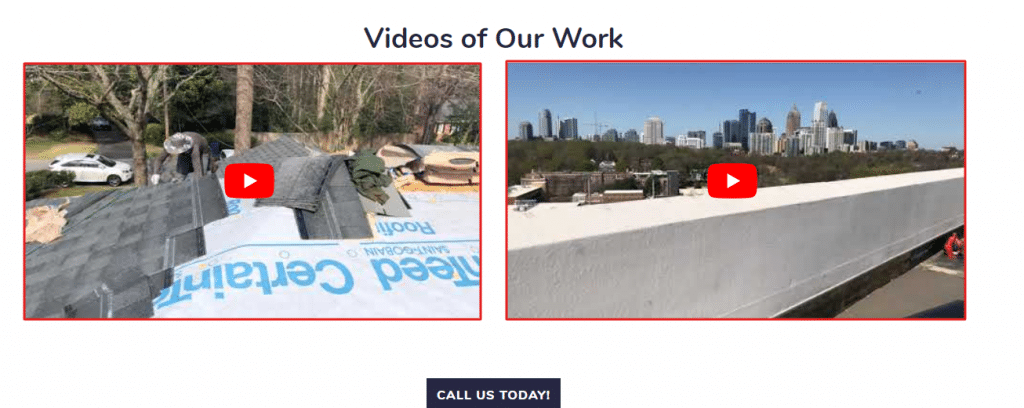
Instead, upload a video to YouTube and embed it onto your homepage, service pages, and blog posts for the ultimate effect.


On-Page Videos

On-page multimedia can increase user engagement


9) Establish a Roofing Brand on Google

One of Google’s primary jobs is to weed out spam websites from their search results. When Google showcases brands to its users, it wants to ensure, at the very least, that the user is dealing with a legitimate roofing company.

So, how does Google determine what a brand is?

Consider things like your staff and equipment’s unique photos, a robust about us page explaining your company vision, and clear and accurate contact information throughout your website.

Each of these things helps establish your roofing company as a brand, which helps with SEO in 2024.


Branded Photo

Unique staff images help establish your brand


10) Request Customer Reviews

As a roofing company, your SEO efforts work faster when you can earn customer reviews on Google and other credible platforms. Receiving regular reviews on your Google Business Profile, in particular, can have an immediate impact on your Local 3-Pack rankings.

You should consider automating review requests through a software application to increase engagement with recent customers. However, this tactic should not replace the act of asking for reviews in person.

Combining automated requests (through text and email) and a friendly in-person request will move the needle in favor of your Google reviews.


Google My Business Reviews For Houston-TX Roofer


(Bonus Tip) Boost Conversions With Strategic CTAs

SEO services aim to bring in more sales for your roofing company. The best way to convert your traffic is to implement engaging calls-to-action (CTAs) throughout your website.

Your site’s header is a great place to showcase your company’s phone number, while the middle part of the homepage is ideal for a contact form.

Be sure to create urgency around your CTAs with phrases like Free Estimate or First Time Discount. Remember, search engine optimization generates high-quality leads for your roofing business.


Call To Action

Showcase CTAs with urgency


What’s The Next Step?

If you need help implementing strategies shown on this list, reach out to Roofer’s Guild today. Our team of marketing experts can optimize your business on search engines like Google and help you convert traffic into sales.

If you want to continue reading more about SEO for roofers, marketing, and other business strategies, feel free to browse our helpful marketing resources. We continually publish new content to help roofing companies thrive in the digital age.


The Pros & Cons of Rubber Roofing


Rubber roofing, sometimes referred to as EPDM or TPO roofing, is a popular choice for commercial roof installation. It holds several benefits for more extensive facilities that need a cost-effective roofing system that will also perform well in severe weather conditions. 

But for these reasons and others, rubber roofing may also be the answer to your residential roofing needs. The fact is that rubber roofing presents many benefits and only a few downsides.

Whether you require a high-performance roofing system for your home or your business, you should know all the pros and cons of rubber roofing.


In the following post, Roofer’s Guild will review the advantages and disadvantages of this popular roofing material.


Pros & Cons for Rubber Roofing (Blog Cover)

Key Takeaway

Rubber roofing presents many benefits like affordability, weather resistance, and longevity compared to relatively few drawbacks like heat absorption.


Benefits of Rubber Roofing

Rubber roofing has been around since the ’60s. The story of how it became a popular option is pretty impressive, too.

EPDM roofing had its heyday in the ’70s because, back then, an oil embargo in the Middle East made high-quality asphalt roofing materials both hard to come by and expensive. 

People started turning to rubber roofing as an alternative and quickly noticed its many benefits.


EPDM roofing has been around for over half a century, and there are plenty of reasons why:


Affordability

EPDM roofing is one of the most inexpensive materials you can select for your property. It can cost as little as $0.50 per square foot whereas other rubber materials like PVC can cost as much as $3.00 per sqaure foot.


Ease of Installation

Rubber roofing materials are very lightweight and more straightforward to install than many other roofing systems. Rather than being welded together to form a tight seal, most rubber roofing systems are continuous, single-ply.

They then adhere to the roofing substrate with industrial roofing adhesive—no need for cutting, shearing, or welding. As a result of the ease of installing rubber roofing systems, the cost lowers, making it even more affordable. 


Safety

A fire hazard is one of the most significant drawbacks of many other roofing systems. But rubber roofing is extremely flame retardant.

Having rubber roofing on your building is equivalent to placing a fire-resistant shield on top of your building.

Not only can it delay the spread of flames during a structure fire, but it can also prevent flames from catching from a structure fire nearby. 


Weather Resistance

Rubber roofing is composed of a cross-linked material. Such material is exceptionally resistant to severe weather because of its chemical makeup.

It is resilient and stands up to hail impact damage very well; it doesn’t catch fire even when lightning strikes and provides excellent water-proofing even in torrential downpours.

Plus, rubber roofing is inherently a low-profile roofing system, so it won’t be a hazard in high winds either. 


Lowered Insurance

Insurance companies are willing to offer discounts between 5 and 35 percent if you install a roof that protects against impact, hail, and lightning damage.

As explained in the previous point, rubber roofing is resistant to all such damage. Installing a rubber roof could save you even more money in annual insurance coverage costs. 

Longevity

Seams are typically what make a roofing system weak. When there are many seams, there are many opportunities for water to get between those seams, damage the roof, and wreak havoc on the entire building.

But with rubber roofing, there are little to no seams created during installation. A lack of seams makes it an incredibly durable roofing option.

An adequately installed rubber roofing system (particularly EPDM roofing) can last for 50+ years.


Disadvantages of Rubber Roofing

There is not much to mention regarding the drawbacks of this kind of roofing system. And in fact, many of the flaws are avoidable with a few tweaks.


Appearance

Rubber roofing looks very plain, industrial, and sometimes downright ugly. Many people don’t even consider it an option for their homes because it can make a house look.

However, some manufacturers are now producing rubber roofing strips that resemble standard shingles. 


Heat Absorption

Another typical drawback of rubber roofing systems is that the materials usually come in flat black, which can absorb a lot of heat and drive up your cooling costs.

But once again, it’s avoidable. Rubber roofing now comes in lighter, more UV-reflective colors to address this shortcoming.

Furthermore, rubber roofing materials can easily be coated with acrylic paint to make them more reflective and add another layer of protection to the material. 


Load Bearing

Many people ask us, “Can you walk on a rubber roof?” The answer is usually maybe.

Rubber roofs can take light foot traffic but require fortification if you need to load building and construction materials onto them if you add a balcony, deck, or second story to your building.

Many people see this as a disadvantage, but it can be negated by adding additional materials to make them stronger. 


Helping You Make Yhe Right Rubber Roofing Choice

If you require a rubber roofing contractor in your area, try searching Google for rubber roofing near me. Select one of the companies that appears within the Local 3-Pack and give them a call or submit a form.

You can read some of their previous customer reviews to determine whether the company is trustworthy and worth your investment. You might also ask some of your friends and neighbors for a roofing referral.


Patio Roof Repair Guide (Cost, Techniques, & FAQ)


Patio Roof Repair Guide

When it comes to patio roof repair, questions come up often. We know patio roofs are a great way to get more out of your backyard or other outdoor areas. They provide shelter from the harsh rays of the sun in the summer. And in the winter, they allow you to engage in outdoor activities even in inclement weather.

But the sun, rain, wind, and hail can wreak havoc on your patio roof no matter what material it is made out of. 

Chances are, if you have a patio roof, you paid good money to install it. You should be able to protect your investment as a homeowner or building owner. As a contractor, you should know the simplest method for patio roof repair.

Whether you are a DIY dominator or a roofer just starting out in the trade, we have a patio roof repair guide that will help you. 


Patio Roof Repair Cost

DIY patio roof repair projects will cost around $60-$100. Hiring a professional to repair a mid-sized patio roof costs between $200 and $1,000. The final price depends on the size and material of your patio roof and whether you do it yourself or hire a professional.


Patio Roof Repair Safety

Safety is always the top priority during any roof repair project. And you need to be extra cautious when repairing a patio roof. That’s because patio roofs aren’t as fortified as a normal roofing structure.

As much as possible, try not actually to step on the patio roof. Instead, do your best to do all the work while putting most of your weight on the actual roof itself. You should wear boots with plenty of grips and use a sturdy ladder firmly planted on level ground.


Repair Steps & Preparation for Patio Roofs


Make Sure the Roof is Clean

Once you are up on your roof, take a minute to observe your patio roof. Is there a bunch of leaves, twigs, and other debris on it?

Before you can get to the heart of the matter, you must clean away all of this debris. In general, keeping your roof clean is a good idea because moss, fungus, and other damaging growths can make their home on your patio roof if debris isn’t regularly cleared away.

This can cause serious damage to your patio roof. The good news is that this kind of debris is easy to clean away. Simply use a sturdy push broom and push off any debris from the patio roof. Try to get as much dirt and dust off the surface as well.


Perform a Deep Cleaning

This next step will require a pressure washer and a roof cleaning solution. You can pick up a variety of roof cleaning agents at your local hardware store.

This article by A Cleaner Choice also gives a helpful list of some of the best roof cleaning products.

But if you don’t want to go out and buy a roof detergent, you can use a simple mixture of one part bleach and three parts water.

Apply whatever cleaning agent you choose in sections. Pour the mixture over one part of your patio roof and then rinse it away with the pressure washer before moving on to the next section.


It is important to keep a few things in mind when you are using your pressure washer:


  • Start off by using the lowest pressure setting. If that isn’t enough to lift mildew, moss, stains, and debris, move up to the medium setting. You should never use the max setting when pressure washing your patio roof.
  • Keep the spray head at least a foot above the surface of the patio roof. Too much pressure or painting the wand too close to the surface can strip shingles of their protective granule, damage the shingle, or even blow it away entirely. 
  • Chances are, your patio roof is flat, but you should always spray your pressure washer downward or toward the edge of the roof line. Spraying upward toward the roof ridge can lift up shingles and cause water damage. 

Dry and Seal

After pressure-washing your patio roof, let it dry for a few hours. It may take a full 24 hours for it to completely dry.

The important thing is to be certain that it’s dry all the way through for the sealant to take hold. When it’s dry, apply an even layer of sealant over the roofing material with a roof brush and on any affected spots (leaks).


Here is a helpful list of some of the best roofing sealants.


Patio Roof Repair FAQs


How Much Does it Cost to Build a Roof Over a Patio?

Typical installations will cost between $6,000 and $10,000. But that is the typical price for a 20’x20’ patio cover. Keep in mind that the larger the patio cover needs to be, the more the project will cost.


What is The Best Material for a Patio Roof?

Aluminum is popular because it is affordable, low-maintenance, and provides reliable protection from rain and other environmental hazards.


4 Common TPO Roofing Problems to Consider in 2024


TPO Roofing Problems Blog Cover

One of the more common roofing systems is known as TPO or a single-ply membrane.

While its popularity stems from various benefits, consumers should also be aware of potential TPO roofing problems before making a final decision.

TPO membranes are currently one of the fastest-growing commercial roofing systems in 2024.


TPO Roofing Benefits

There are many benefits to implementing a TPO roofing system onto your current commercial roof. It has great strength, durability, and flexibility.

That means being able to stand up to a build-up of dirt, resistance to tears, and mold growth as well.

Perhaps its best trait is that it is energy efficient. TPO membrane is meant to reflect and resist those UV rays that can heat up a building, making it easier and more efficient to keep the building cooler.

This, in turn, means that the building doesn’t need to use the HVAC system to compensate.

TPO roofs are a highly efficient and effective roofing system for commercial roofing buildings, especially flat roofs.


TPO Roofing Problems

As good as these roofing systems are, there are four common TPO roofing problems to be aware of.


1) Easily Punctured Membrane

Of all the TPO roofing problems there are, this is the one that is probably the most problematic. While this roofing system can be walked on, and it is both flexible and lightweight, the membrane itself can be easily punctured.

With commercial roofs, one of the more common TPO roofing problems is a high volume of foot traffic compared to other types of buildings or roofing structures.

The single-ply membrane roofing doesn’t have a hard-top layer that is meant to protect the layer of synthetic rubber from things like gravel, dropped tools, or loose screws.

Common TPO roofing problems like this see those materials pushed into the rubber membrane, breaking or tearing it by creating holes in the rubber and insulation.

This leaves the roofing system more vulnerable to leaks further down the line.

With a proper primer, you can take this one off the list of TPO roofing problems by giving it an extra layer of insulation and protection that it did not have previously.


2) Expired Warranty

Here’s a key tip: purchase the warranty when you have a new roofing system installed. This is because most manufacturer warranties will require the contractor to perform those repairs for the first couple of years after the initial installation.

Warranties can also be anywhere from 15 to 30 years. Common TPO roofing problems can be solved by having a warranty on your side.

Stay on top of it because when your warranty expires, you could be susceptible to higher maintenance and repair bills, especially if your facility has encountered problems.

It cannot be emphasized enough that having a warranty is a great way to keep TPO roofing problems in check.

Things happen, leaks occur, damage can be done, and having a quick, reliable fix on your side is far easier than finding a repair service on your own and eating the costs out of your pocket.

Protecting yourself is a little more costly than you may have thought, but it is a great way to protect yourself from persistent problems or future repair bills. That alone makes it worth the cost alone.


3) UV Rays Degrading the Adhesives

Wear and tear is certainly one of the most common TPO roofing problems. Actually, scratch that. It is one of the most common problems with any roofing system out there.

This is because it is exposed to the elements 24 hours a day, seven days a week.

That also means constant exposure to the sun. Those harmful UV rays can significantly damage a roofing system over time.

It can happen in many different ways, but the most common TPO roofing problems occur when those UV rays degrade the adhesives used to attach the membrane to the substrate.

Not only that, but those adhesives are also what seal the seams of the membranes together to create the waterproof seal that keeps your roof safe in even some of the harshest of weather conditions. Without that seal, your roof is vulnerable.

When there are punctures, tears, or other damage to your roof, those UV rays can come into contact with the adhesive layer and cause a lot more damage when those adhesives deteriorate.

That is why it is important to ensure that the membrane sheets overlap during installation. This will block the adhesives from exposure to UV rays and prevent those TPO roofing problems from occurring, at least not consistently.


4) Longevity

Perhaps the most common TPO roofing problems are that they tend not to last as long as some other roofing systems. TPO roofing is definitely strong and durable, but it is still something of a young technology in the roofing industry.

That means that the formula that is used to produce this TPO material is still far from perfect as the manufacturers attempt to find a balance between affordability and durability.

This means that, along the way, some of these roofing systems have had common TPO roofing problems like material failures and seam cracks.

Some improvements have been made along the way, but it may be some time before the formula is perfected. Still, TPO roofing systems are affordable and tend to be durable more often than not.

All of these TPO roofing problems are fairly common, and that means that they are relatively easy to solve as well.

Keeping this in mind, it is easier to keep them working optimally and avoid having to deal with major issues or damages to your roofing system.


Final Takeaway on TPO Roofing Problems

TPO roofing systems offer various benefits to commercial properties, making them one of the most popular choices in 2024.

However, TPO roofs also come with a set of potential problems that consumers should be aware of before making a final decision.

While these problems are not severe enough to dwindle the popularity of this ascending roof type, they are worth exploring when considering all your roofing options.


How Much Weight Can a Concrete Roof Support?


When considering roofing materials, there are a lot of factors to take into consideration. Durability, cost, and a litany of other things can impact which material you go with for your residential or commercial roof. But weight capacity is another important one.

Some mistakenly believe that concrete roofs are endlessly sturdy, regardless of contributing factors. That is not the case. In the following article, Roofer’s Guild explores the nuances of this topic.


How Much Weight Can a Concrete Roof Support (Cover)

Key Takeaway

A concrete roof can support about 1,200 pounds per square foot. However, variables like thickness, reinforcements, and installation quality all contribute to its maximum capacity.


How Much Weight Can a Concrete Roof Hold Per Square Foot?

While the answer to this question can vary greatly on several factors within the concrete itself, a good rule of thumb is around 1,200 pounds per square foot, depending on the thickness of the concrete and whether or not it has any reinforcements.

A common mistake is that amateur roofers just assume that concrete is impossibly strong, but it has weight restrictions just like any other material.


Reinforcing the Roof

With newer installations, this is likely a common practice performed by the roofer doing the job. But in older homes, the question of weight support becomes irrelevant if it is quite old or has experienced a lot of damage.

While a complete replacement is the most ideal of scenarios, the cost of a new roof is often not so realistic.

That is where reinforcing the roof can help get a longer life out of your roof while implementing a fast, quick repair and reinforcement that will keep the structural integrity of the roof sound for some time.

Again, it is highly recommended that you get a new roof wherever you can. Still, there are a couple of ways to reinforce your roof to give it a little boost in terms of life span.


Addressing Repairs with Patching

If the deterioration or damage to your concrete roof isn’t terribly bad, it can be patched to extend its life a little longer.

But if you are implementing extensive patchwork, it is important to note that you should not assume that it can take on a proper load and will never be able to handle the maximum weight.

The condition and age of the roof are essential factors for determining the amount of weight it can support so that you or a roofing contractor can safely traverse the roof.


Strengthening Existing Trusses

This is a way to add durability to your roof. By using 2×4s, you simply combine them with any existing trusses that may be in place from one end of the structure to the next. This can allow for extra stability.

However, this is not meant to be a long-term solution if the roof is showing signs of wear and deterioration.

Exercise caution whenever getting on the roof and understand that this is just prolonging the eventual replacement of the roof entirely.


Signs That the Roof is Failing

While not every roofing structure will provide clear warning signs, the question of weight support becomes moot once the damage is obvious.

Existing damage makes traversing the roof unsafe and a serious hazard.

There are definitely a few things to keep an eye out for regarding the condition of your roof and whether or not there may be issues currently occurring.


Leaks

The biggest issue plaguing roofing systems, concrete roofs, too, is in the form of leaks. If you see multiple wet spots in your ceiling or moisture retained on the roof, it is a strong sign that the roof has a weak spot that can lead to bigger issues.

Leaks are a huge issue not only for the roofing system itself but for the structural integrity of the rest of the building.

If that water is allowed to persist, it has the chance to rot and decay wood that could provide structural support and lead to mold growth, making it a hazard to the air quality in the building.


Cracks

Cracks are a clear indication that there may be problems with your roof. This can mean that stress is being implemented onto the roof and spreading outward in other directions.

This can lead to serious problems with your concrete roof, making it structurally vulnerable and making it unsafe to be near.

Small cracks are not a terribly big idea, but calling in a proper roofing contractor to survey the scene and understand the situation will allow you to stay ahead of any potentially disastrous situations.

It is always better to exercise caution in scenarios such as these.


Other Weight Considerations for Concrete Roofs

So many factors determine “how much weight can a concrete roof support” that it isn’t a black-and-white question.

A concrete roof can safely support around 1,200 pounds (0.54 t) per square foot when completely healthy and showing no signs of wear and tear.

But that figure can drop exponentially when leaks, cracking, chipping, and other damage rears their ugly head. If you see areas of your concrete roof that look concerning, the safest bet is to avoid stepping in those areas and leave it to the professionals.

Your concrete roof can stand up to a lot and prove to be a durable choice in roofing material, but it is certainly not immune to its own issues. You can consult this roof load calculator if you are worried about snow.


Final Thoughts

A concrete roof can typically support about 1,200 pounds per square foot. However, variables like thickness, reinforcements, and the quality of installation can all alter that general threshold.

Roofing contractors and property owners can both take measures to maximize the concrete roof’s weight capacity, including performing repairs, adding reinforcements, and strengthening the trusses.