Author Archives: Roofers Guild

56 (Legitimately Great) Roofing Company / Business Names

Roofing Company Names (Blog Cover)

Roofing company names are an essential part of your business plan. Your name can contribute to your marketing, online presence, conversion rate, and overall brand recognition. Of course, your reputation ultimately comes down to performance, but your name can enhance or detract from your services and sales opportunities.

Roofer’s Guild has worked with thousands of roofing companies as a top roofing resource in the United States. We’ve analyzed the factors contributing to a successful roofing business name. Below are 56 name ideas for roofing companies.

#Company Name
1Accelerate Roofing LLC.
2All-Star Roofing LLC.
3AllOut Roofing Co.
4Arrow Roofing Group
5Ascend Roofing Co.
6Aura Roofing & Construction
7BigBox Roofing
8BlueMarble Roofing
9Boom Roofing
10Boss Roofing
11Capitol Roofing Group
12Champion Roofing Co.
13Citizens Roofing
14Cornerstone Roofing 
15CrossRoads Roofing Co.
16Crown Roofing
17Dash Roofing Solutions
18Dawn Roofing LLC.
19Deluxe Roofing Co.
20Empire Roofing Co.
21Envision Roofing
22Excite Roofing Group
23Faith Roofing & Construction
24Fortify Roofing Group
25GoldenAge Roofing Group
26GoTo Roofing
27Green Earth Roofing
28Helix Roofing Solutions
29HighFive Roofing
30HomeRun Roofing
31Hustle Roofing Inc.
32Infinite Roofing Co.
33King Roofing Solutions
34Kingdom Roofing 
35LightHouse Roofing
36Momentum Roofing
37OnBoard Roofing
38Paradise Roofing Co.
39Platinum Roofing & Construction
40Premier Roofing & Construction
41Prevail Roofing Inc.
42Prime Roofing Group
43Prize Roofing & Construction
44Propel Roofing Group
45Response Roofing
46Rise Roofing
47Roofing Thunder
48Rush Roofing & Construction
49Strike Roofing Group
50ThunderBird Roofing
51Unity Roofing Solutions
52Valor Roofing Co.
53Velocity Roofing Solutions
54Versatile Roofing
55Village Roofing
56Virtue Roofing Group

*Always check if a business name is trademarked in your State

You can also check trademarks on Trademark Electronic Search System.

Once you verify your name is not trademarked, check domain availability at Instant Domain Search.

Anatomy of a Roofing Company Name

When naming your roofing business, you want to consider factors like length, marketability, topical relevance, and branding. In addition, since most of your business will come from online channels like Google, it’s essential to consider how your name factors into Google’s algorithm.

Length

Your company name should be concise enough to form a domain name under 13 characters. Although your domain name can be slightly different from your brand name, it should come very close. Furthermore, you’ll also be listing your full name on your Google Business Profile and throughout various online directories.

Marketability

Generic names are difficult to market, so being creative pays off with a roofing business name. First, ask yourself, “would I remember this name?” If the answer is no, you probably need to return to the drawing board to find a more marketable name for your roofing company.

Topical Relevance

One of the biggest mistakes roofers make is naming their company with the word “construction” instead of roofing. For example, there are better names than All-Star Construction for a roofing company. 

Your goal is to rank on Google for terms with “roofing” in the query. As a result, it’s essential to have “roofing” somewhere in the company name. Including topical relevance ensures strong SEO for roofers.

Branding

Your name must be brandable for your online presence, business cards, truck wraps, and other marketing materials. Of course, you’ll want to find out if your name is trademarked in your State and ensure you can legally use the name long-term and scale your business.

You don’t want to change your name later because it can create problems with your website and other online listings. Having worked with thousands of roofers, we know that the name-changing process can set back your marketing campaign by years.

Final Thoughts on Roofing Business Names

A company name is essential to roofing business success. A name can increase conversion rates and help you rank higher on Google search results. As a result, invest energy into your name choice before going forward with your business plan.

Remember to check your name’s legal availability through trademark search. It becomes a major headache to change your business name after launching a website, so thoroughly vet the name before launching your online marketing campaign.

Exclusive Roofing Leads in New Jersey


Generating New Jersey roofing leads involves balancing digital marketing with community outreach. The state of New Jersey offers unique weather conditions, ranging from hail and heavy snow to the New Jersey Shore winds, all of which create new roofing repair and replacement opportunities.

Roofing services in this state are highly competitive. Although licensed professionals fall under the broader Home Improvement Contractors (HIC) umbrella rather than a specific roofing license, we estimate there are between 2,200 and 2,800 active roofing companies in New Jersey.

Given the competition and opportunities, roofing businesses must be proactive in establishing lead-generation channels to stand out from competitors.


Roofing Leads New Jersey (Blog Cover)


Google Local Service Ads (LSA)

Lead generation starts with visibility and awareness, which is why Google’s Local Service Ads are often the first marketing investment New Jersey roofers make.

Local Service Ads (LSA) differ from traditional Google Search Ads in that they use a pay-per-lead model rather than pay-per-click. LSA ads also require verification and background checks, which weed out fly-by-night storm chasers while legitimizing the businesses that meet the criteria.

LSA ads appear at the very top of search results for many New Jersey roofing service queries, serving as prime real estate for online visibility. As a result, the cost per lead (CPL) ranges from $80 to $230.


PPC Ads for New Jersey Roofing Companies

Local SEO

Google’s local pack represents the most prominent organic spot for New Jersey-based roofing companies. By ranking in the 3-pack for location-based queries, roofers can secure high-intent leads without paying a fee.

Ranking in the local pack requires claiming and verifying your Google Business Profile and getting a consistent stream of customer reviews. Profiles with consistent review activity are prioritized in the local algorithm.

The website URL attached to your business listing also plays a major role in local rankings. By optimizing your business website for target keywords, you can rank within the local pack and traditional organic results.


Google SERP for Organic New Jersey Roofing Leads

Community Outreach

Visibility is essential, but local lead generation depends on long-term community-based trust. New Jersey roofing companies that network locally, such as sponsoring a youth sports team, generate and convert the most prospects.

It’s one thing for a homeowner to see a short video of your services pop up on their Instagram feed, but it’s quite another when they see your logo on their kids’ basketball uniforms. While the direct impact cannot be totally quantified, its correlation with successful roofing companies is universal.

Adjacent businesses in your service area are also part of community outreach, such as real estate companies and insurance agents, both of whom can refer your company to homeowners year-round.


Social Media Marketing

Social media posts are a way to humanize your roofing business, increasing trust and conversions. Posting shorts and reels of your staff, or even drone footage, can legitimize your brand.

Unlike LSA ads or local pack rankings, social media posts, or even paid social ads, may not directly generate leads. Their purpose is indirect, but still vitally important to your company’s overall success.

The most prominent social media platforms for New Jersey-based roofing companies include Facebook, Instagram, YouTube, and TikTok. Aside from trust and conversion, social media activity also contributes to local search optimization and answer engine optimization.


Best Cities for New Jersey Roofing Leads


Rank City/Township County What It’s Like Why You Should Work Here
1 Toms River Ocean Suburban/Coastal Massive: Tons of homeowners + salt air eats shingles for breakfast.
2 Edison Middlesex Suburban Hub High Volume: Packed with homes, lots of old shingles ready to go.
3 Cherry Hill Camden Affluent Suburb Premium: Big-ticket jobs, but LSA competition is stiff.
4 Brick Ocean Coastal/Suburban Storm-Prone: Lots of insurance jobs, wind-rated shingles are key.
5 Middletown Monmouth Luxury/Large Lots High Ticket: Big houses, big roofs = $25k+ jobs all day.
6 Lakewood Ocean Rapidly Growing New Construction & Repairs: Always building, lots of multi-family work.
7 Wayne Passaic Mature Suburb Aging Stock: Houses from the 60s-80s needing their 2nd or 3rd roof.
8 Hamilton Mercer Middle-Class Consistent: Steady work, cheaper leads than North Jersey.
9 Woodbridge Middlesex High Density Volume: Mix of old capes and newer colonials everywhere.
10 Montclair Essex Historic/Luxury Specialty: Slate, tile, and metal jobs. Know your stuff here.
11 Parsippany Morris Corporate/Suburban Stable: Good income, folks make decisions fast.
12 Old Bridge Middlesex Expanding Suburb Growth: Big developments hitting the 20-year roof replacement mark.
13 Clifton Passaic Urban/Suburban Repair Heavy: Tight lots, older houses that need constant work.
14 Howell Monmouth Rural/Suburban Large Roofs: Sprawling ranches and colonials = big square footage.
15 Westfield Union High Income Elite: They want quality, not the cheapest guy.
16 Evesham (Marlton) Burlington High Demand Hot Market: One of the fastest-selling zip codes in the state.
17 Jersey City Hudson Urban/High-End Commercial/Brownstone: Flat roofs and specialty work.
18 Ridgewood Bergen Ultra-Premium High Margin: Prestigious area, expect sky-high standards.
19 Monroe Middlesex Retiree/Senior Decision-Makers: Lots of 55+ communities, folks ready to pull the trigger.
20 Berkeley Township Ocean Retirement/Shore High Turnover: Old roofs in high-wind zones = constant work.

Start Getting NJ Roofing Leads Today

New Jersey is a competitive roofing market with climate conditions conducive to consistent job opportunities. Standing out from competitors requires a balance between short-term digital visibility and long-term community trust.

By investing in Local Service Ads, Local SEO, community outreach, and social media marketing, New Jersey roofers can strike that balance and secure high-intent, high-conversion leads within their defined service areas.


Pros & Cons of Sealing Roof Tiles


While sealing roof tiles can offer benefits like reducing water absorption, preventing algae growth, and enhancing aesthetics, it is not always necessary or advisable.

On the surface, adding a coat of weatherproof sealant to any roofing material sounds like a good idea. After all, you add an extra layer of defense to your roofing material and, ultimately, your property.

However, properly installed tile roofs do not require sealing because they are designed to shed water naturally.


In the following post, Roofer’s Guild will discuss the advantages and disadvantages of sealing roof tiles.


Sealing Roof Tiles (Blog Cover)

Key Takeaway

Sealing roof tiles is not common because properly designed and installed roofing tiles should naturally resist water without needing additional sealant.


Benefits of Sealing Roof Tiles

Yes, there definitely are some benefits to sealing your roof tiles.


Take a look at the most important ones:


  • It May Prevent Cracking: Sealing may prevent tiles from breaking if you live in a colder climate where rainwater can freeze on the roof. When water enters hairline cracks in your roof tiles and freezes, the expansion can break the entire tile. Keeping the water out with a sealant may prevent this. 
  • It May Extend the Life of Your Tiles: An extra layer of water protection may help slow down the weathering of your tiles, potentially extending the life of the material by just a few years. 

Drawbacks of Sealing Roof Tiles

Before you go out and buy sealant or call up your local roofing contractor, take a look at some of the disadvantages of sealing roof tiles:


  • You Need to Pressure Wash the Tiles: Before you can apply a sealant, the tiles need to be as clean as possible. Most contractors will use a pressure washer that can strip the tiles’ surface material if not carefully done. Of course, to pressure wash, you will need to get up on the roof. Any time you step on roof tiles, you risk breaking them, which, as discussed, is one of their inherent disadvantages. 
  • It Could Ravage the Good Looks of the Tile: Sealant isn’t permanent. After just about a season, it will strip off, and the color of your roofing tiles goes with it. When a sealant wears and chips away with the rainwater and UV exposure, it can alter the appearance of your roofing tiles – rarely for the better. 
  • It May Not Be Worth the Effort: If you live in a stormy area, you may have to reapply sealant every couple of years, which can add up to a lot of money and effort that may not even be necessary. Plus, if you plan to do the work yourself, it can be hazardous to get up on the roof, pressure wash, and apply the sealant. 

Roofing Tiles and Pitched Roofs

Roofing tiles are only installed on pitched roofs. A pitched roof is simply a roof that has a slope. To be considered a pitched roof, a roof usually has to be sloped at an angle of 20 degrees. 

The slope is important because water can successfully be shed off the roof and down into the gutters at this angle with the help of good old gravity. As a result, roofing tiles are not sealed to the roof. They are individual pieces of slate, terra cotta, or concrete laid on top of each other in an overlapping fashion. 

Unlike roofing materials like asphalt shingles, tiles are not fastened to the roof. Instead, the overlapping placement and weight keep them in place and protect the roof’s decking. In addition, though they don’t create a single, continuous layer, the pitch effectively helps them shed water off the roof. 


Tile roofs differ from asphalt shingle roofs in that they are exclusive to pitched roofs, and the tiles are not fastened to the actual roof system. That distinction is the primary reason why sealing is uncommon.


What’s the Point of Sealing?

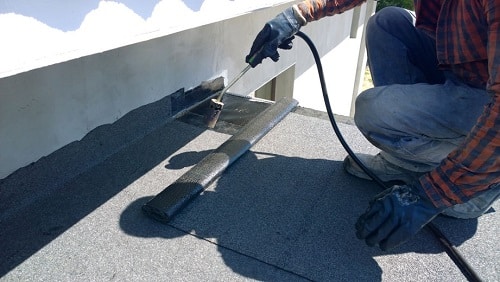
Sealing a roof entails adding a waterproof coat to the upper materials. The point of sealing any roofing material is to help keep water from absorbing into it.


Are Roofing Tiles Porous?

Salespeople say that roofing tiles are porous and susceptible to water absorption. And guess what? They’re not lying. Materials like concrete, terra cotta, clay, and slate are indeed porous. However, you must consider that roofing tiles are only installed on sloped roofs. 

While these materials may be porous, they can also be water-resistant. That’s because gravity sheds water off the roof for them. If roofing tiles were installed on a flat roof (and they would never be, to be clear), it would be a completely different story. 


You would have to seal your tiles every season, as the water would pool on them and permeate them constantly. 

But that’s not the case with sloped roofs. In general, roofing tiles on a sloped roof can afford to be porous. As a result, it’s not necessarily detrimental to the structural integrity or weatherproofing of the roof. 


We know what you might be thinking, ‘but roofs with tiles on them still leak sometimes.’ That is exactly right. But that happens for different reasons. Usually, when you get a leak in a tiled roof, it means that one or more of the tiles is broken.

One of the downsides of a tiled roof is that the older the tiles get, the more brittle they become. So, when you need to have some work done on a roof, old tiles can break under the pressure of footfall. 


Another reason tiled roofs leak is from a bad installation. Tiles must be carefully overlapped to provide full coverage.

Ridge caps also need to be installed carefully to protect the vulnerable point of the roof where the two slopes meet at the apex. 


Ridge caps also need to be installed carefully to protect the vulnerable point of the roof where the two slopes meet at the apex. 


Final Thoughts on Sealing a Tile Roof

In most cases, sealing a tile roof is not worth the investment. Instead, you should have your roof inspected by a professional once a year to ensure that no tiles need to be replaced.

In most cases, roofing tiles will provide enough weatherproofing on their own. However, if you live in a frigid region of the country, you may want to consider sealing roof tiles to prevent freezing and breaking. 


5 Tactics to Generate High-Quality Charlotte Roofing Leads


With over 1,000 roofing companies in Charlotte, NC, it can be challenging to generate Charlotte roofing leads consistently.

Still, you can take steps to increase your chances of acquiring roofing leads in Charlotte.

Establishing a cohesive online presence with other traditional marketing practices can create a synergistic lead generation system.


Below, Roofer’s Guild outlines five tactics to generate high-quality roofing prospects in the Charlotte, North Carolina, area.


Charlotte Roofing Leads (Blog Cover)

1) Local SEO

Local SEO is a form of search engine optimization focusing on a local area, such as Charlotte, NC.

Like traditional SEO, Local SEO aims to rank your website on Google Search Results. However, it also targets Google Maps and a unique SERP feature called the Local Map 3-Pack.

With Local optimization, your goal is to rank for local keywords like roofing services in charlotte, or charlotte roofing company.

Both your website and Google Business Profile can rank for these terms with proper optimization.


Additionally, your GMB listing can rank for local queries like roofer near me.


  • Local Backlinks: You can contact local businesses (not direct competitors) and ask them to include a link to your site on theirs. Local links help generate more local traffic to your site.
  • Long Tail Keywords: Using locally oriented longtail keywords like “Roofer in Charlotte” in your website’s copy is another excellent way to boost local traffic and generate high-quality leads. 
  • Local Blog Content: Blogging is a great way to generate more website traffic, but you should take it further. Include local keywords in your blog posts and write on topics that focus on local events or issues. 

Charlotte Local SEO Screenshot

2) Reputation Management

Gathering impressions is a significant first step to achieving local success online.

Still, consumers will vet your company before making first contact.

As a result, Charlotte roofing companies must attend to reputation management.


Online reviews are the foundation of your online reputation, especially on popular platforms like Google, Facebook, and Yelp.

You can expect to lose business if your company lacks reviews or shows several negative reviews.

Luckily, you can enhance your online reputation through tasks such as sending automated review requests to customers and replying to reviews on various platforms.


Another great tactic is showcasing online reviews on your website.

Include links to your review sites and send them via text or email.

And don’t be afraid to ask for reviews in person.


At least one report has shown that 72% of consumers will leave a review for a company if merely requested. 


3) Google Business Profile

Google Business Profile is a sub-category of local SEO, but it is essential enough to deserve particular focus.

Your business profile ranks on Google Search Results for local queries and showcases your Google reviews.

As a result, your Google My Business listing encapsulates Local SEO and Reputation Management in one form.


Consumers can find your business and gain trust from your Google Business Profile.

With this in mind, optimizing your Google listing is critical to acquiring local customers.

So be sure to add photos to your listing and fill out your profile and FAQ section. 


The best thing about Google Business Profile is that it is absolutely free!

You will need to undergo a vetting process so that Google can confirm your company’s information, but you won’t have to pay any money.

Once your business is verified, filling out your profile is easy. You can get started here.


Check out these tips for a more compelling profile:


  • High-Quality Images: Include HD images of your storefront, fleet, team, or completed projects.
  • Areas Served: Be sure to mention all your service areas.
  • Accurate Information: Be sure your business name, phone number, and physical address are correct and listed the same as on your website.

Google My Business Listing for North Carolina Roofer

A Google Business Profile allows Charlotte-area roofing companies to appear on the Local Map 3-Pack for queries like “roof repair near me” or “roofing repair charlotte.”


4) Attend Trade Shows

Getting out from behind your computer is vital if you want Charlotte roofing leads.

Trade shows are a great way to connect with contractors who could use your services even if you don’t have an exhibit. 

B2B (business-to-business) leads from trade shows can be lucrative and help spread the word about your services.


People in roofing-adjacent (sheet metal, construction, general contractor, demolition, etc.) industries attend these trade shows, which is a great way to make business connections. 

Trade shows are very beneficial if you do commercial roofing work.

For example, the Carolinas Roofing and Sheet Metal Contractors Association (CRSMCA) meeting is one trade show to check out if you operate in Charlotte


5) PPC Advertising

Pay Per Click advertising is a great way to gain valuable leads, whether your business is relatively new or established.

It puts your ads that relate to people’s interests and search queries on their computer screen. 

For example, if someone searches for “roofer in Charlotte,” even if your business doesn’t appear as one of the top results, your ad will.


Therefore, it’s crucial to craft well-written and relevant landing pages to go with your ads, so it may be good to contact an agency for help. 

PPC ads should also be used to supplement your local SEO efforts. In other words, you shouldn’t rely solely on PPC ads.

Building a brand is most important, so investing in a custom website and domain name legitimizes your company.


Next Steps for Charlotte Roofing Companies

If you’re ready to start generating leads, the first step is to claim and optimize your Google Business Profile.

This is a simple and free step you can take before investing any money into your marketing campaigns.

In addition, door-knocking and networking are low-cost avenues for establishing a branded presence in the greater Charlotte area.


When you’re ready to increase your lead frequency, consider hiring a top roofing SEO provider to expand your acquisition channels in 2024.


5 Clear Signs It’s Time to Re-Roof Your Multifamily Complex


Multifamily Re-Roof (Blog Cover)

Re-roofing a multifamily building is not something you want to do until it becomes necessary. Ideally, you want to put off this investment for as long as possible. Yet, at the same time, you do not want the condition of your roof to be the reason your property is losing money.

At Roofer’s Guild, we stress the importance of knowing when the roof absolutely needs to be replaced, and doing it will be a further investment in the continued success of your business. In the highly competitive world of rental housing, a good roof makes a lot of difference.

According to SGI Management Dallas, the roof plays a huge factor in how much money you save on the property. Being a vital part of the building envelope, it profoundly affects the building’s energy efficiency. Roofs also influence how much you spend on maintenance since they protect the building from damage. 

It is not enough for your roof to be functional; the roof of a multifamily complex should also be beautiful. It should help the property stand out and give you the ability to make a style statement. In addition, a multifamily building will attract more renters if it has an attractive roof. 

The roof plays a significant role in your marketing. Roof maintenance should also feature as a major part of your overall maintenance. These are two good reasons to keep your roof in good condition. How can you tell when it is time to re-roof your multifamily complex?


Signs it is Time to Re-Roof Your Multifamily Complex


1) Aging Roof

How old is the roof? Every roof has an expected lifespan, which depends on the type of roof. Asphalt roofs will last anywhere from 15 to 30 years. You can expect a metal roof to last 40-70 years, depending on the material. Clay and cement roofs can last 50-100 years. 

In addition to the roofing material, maintenance plays a role in the longevity of your roof. If you follow the manufacturer’s program for maintaining the roof, you will get it to last longer than its projected lifespan. It is always good to start planning for roof replacement once the roof approaches the end of its projected lifespan.


A multifamily roof’s lifespan may vary depending on maintenance, installation methods, and climate factors


2) Repair Costs

Due to the sheer size of the roof on your multifamily building, you may have at least one roof-related repair every month. These will often be minor issues that don’t cost a lot of money.

But the time may come when the repairs on your building’s roof start to stack up. Then, you could find yourself having to deal with the same kinds of issues repeatedly. 

If you notice this, it is time to calculate your monthly roof repair costs and compare that cost to your monthly payments if you took a loan to reroof the building. If the cost of repairs is anywhere near the monthly payments for a roof replacement loan, you should reroof the building.


Multifamily roofs typically require frequent repairs, primarily because of the building size


3) Community Upgrade

There is no better time to reroof the building than when you are ready to give your property a facelift.

Just as with your primary home, you constantly need to update the appearance and function of your multifamily complex to stay competitive. But you won’t get much mileage out of the renovations if you only repaint the home but leave the old, faded, or discolored roof.

If it will cost too much to do a sweeping renovation of the entire property, it is usually better to wait until you can do this. An excellent way to lessen the financial burden of renovating the property is to update the appearance of one section of your property at a time.


Commercial Flat Roofing Contractors Apply Material

Consistent upgrades to your multifamily complex will help maintain its appeal and stay competitive


4) Property Additions

If you plan to add new buildings to your property, you should consider including roof replacement and other improvements as part of the project. If you add a new building while the old ones retain their old appearance, you will only get a disjointed look that will not benefit your property.

To maximize the impact of the new building, you need a matching roof design for the entire place. Another reason to reroof the building at this time is you may not find a design that will match the new roof precisely if you decide to reroof the property later.


Green Roofing Systems With Terrace Area

Property additions are a great time to take care of roof replacements for your multifamily building


5) Building Roof Damage

Your roof may start to deteriorate before it gets old. There are several reasons why this can happen. The main reasons are the climate in your area, improper roof installation, use of substandard materials, and natural disasters. 

If the roof shows signs of premature failure, you will have no option except to reroof the property. In this situation, speed is essential because as long as the roof is not replaced, it will endanger the rest of the building. Failing to act now means you will only spend more money to solve the problem down the road.


Damaged Flat Roof Membrane

Significant damages to your building roof should prompt you to re-roof your multifamily complex


7 Convincing Reasons for Roofing Companies to Use TikTok

TikTok for Roofers (Blog Cover)

A few years back, I had just finished a pristine roofing project when my younger nephew came up to me with his phone, showing me a funny roofing video on his TikTok app.

I remember laughing out loud, thinking, “Isn’t TikTok for teenagers dancing and singing?”

My nephew slyly replied, “TikTok is for everything, even roofing.”

While I was far from sold by his assertion, I remember gaining a curiosity about this social platform at that very moment.

Today, that curiosity has transformed into a full-on recognition that TikTok for Roofers is absolutely a marketing tool — and one that is a whole lot more enjoyable than “Traditional marketing methods.”


As a proud member of Roofer’s Guild, I will outline seven reasons all roofers should consider using TikTok in 2024.

But first, we have to answer the most essential question:


Logo

Key Takeaway

TikTok for roofers is a valuable advertising and marketing tool to help your company expand brand awareness and generate more roofing leads.


Do Roofers Need TikTok?

TikTok is a popular social media platform that will only get more popular. And as a marketing rule of thumb, you should be present where the consumers are. 

As of 2024, TikTok has 1.4 billion users, which is expected to reach 1.8 million by the end of the year.

TikTok is known for short, video-based content, which presents an opportunity for roofing contractors. But it goes much deeper than that.

Users spend more time on TikTok than all social media platforms, averaging 55.8 minutes per session. For contractors serious about getting in front of more eyeballs, the appeal of this platform is obvious.

TikTok should be a part of your content/social media marketing strategy, along with Instagram, Facebook, and Linkedin.

TikTok Roofing Results (Screenshot)


Reasons to Use TikTok for Your Roofing Company

Running a roofing company presents countless challenges; some you see coming and others you don’t. Let’s be honest: TikTok should not be your top priority (nor should any social media platform).

However, if you aim to expand brand awareness and generate more leads for your roofing business, you should absolutely pursue TikTok.

Below are six convincing reasons for roofing companies to use TikTok.


1) TikTok Ads Can Generate Roofing Leads

The best reason to use any social platform, including TikTok, is to generate roofing leads. TikTok Ads allow roofing companies to run billboard-style ads directly in the users’ feeds.

Because TikTok is an addictive social media platform, users spend hours scrolling their feeds, which can include exposure to your ads. 

As with Facebook or Instagram Ads, it’s essential to create attention-grabbing video ads that immediately hook the user.

It’s even more critical with TikTok, as users have the shortest attention span of any other social media user.

Installing a TikTok pixel on your website is a great way to optimize your ad budget properly. When TikTik users visit your website, they can be retargeted via the TikTok app.


2) TikTok is User-Friendly

One of the great things about TikTok is that creating a profile and post is straightforward.

With TikTok, you won’t need to employ any experts. The platform gives you all the tools you need to create engaging content.

You don’t need to know anything about coding or have any experience in web design.

As long as you have a basic smartphone experience, you will find TikTok very intuitive and user-friendly.


3) TikTok Helps you Reach your Target Demographic

There are about 80 million Americans who use TikTok every month. About 60% of those users are between 16 and 24. 

As a roofer, this isn’t your target demographic. But 26% of TikTok users are between 25 and 44, which is your target demographic. 


Roofing Advertising Guide


We know what you are thinking: 26% doesn’t sound like much. But when you consider that 26% of 80 million is 20,800,000, you realize you are still dealing with a vast pool of people. 

People between the ages of 25 and 44 will most likely be first and second-time homeowners: the same people who are very likely to have many questions about their roofs. 


4) TikTok Helps With Local Targeting

With TikTok, you can aim your content (and your ads) at people in your direct vicinity.

For example, we know that it wouldn’t do a roofing company much to have their content seen by someone in a different state.

But TikTok allows you to target users in your city, town, or county so that the people most likely to hire you will see your content.

Local targeting is part of what makes it a great local SEO and marketing tool.

Aside from location, you can filter who sees your content by criteria like age, interests, and gender. First-time users should try location filtering initially.

Then, however, you can start fine-tuning your demographic targeting as you get a better sense of your audience.


5) Roofers Can Repurpose TikTok Content

If you create something specifically for TikTok, you can use it on other platforms like Instagram. 

Suppose you make a particularly popular or helpful video (based on the number of views and comments). Consider publishing it on your website or your company’s YouTube channel to maximize its reach. 

YouTube offers a variation of TikTok content with YouTube Shorts, which are 60-second or fewer videos that serve a similar purpose to TikTok videos. 

Users quickly consume these kinds of videos by browsing through the YouTube Shorts section.

TikTok videos are commodities you can spread across all your online outlets to increase visibility for your company. 

While recycling TikTok videos may not always be the best idea, it’s good to understand that it is always an option. 


6) TikTok is a Great Platform for Instructional Videos

Instructional videos and short “how-to” guides are viral on TikTok, especially after the pandemic.

As a result, people are willing to use the platform they already spend a lot of time on to learn to do simple tasks.

The how-to format of videos provides a golden opportunity for roofers to make guided videos regarding roof maintenance.

Many people have questions about their roofs, and new homeowners will likely take to TikTok to answer those questions.

The only question now is: will you be the one to answer them?


7) People Buy Through TikTok

Will TikTok earn you more customers? That depends on the effectiveness of your posts. But what is certain is that TikTok users are more than willing to use the app to make purchases. 

TikTok is the number one platform for purchases of goods and services. Not only that, many TikTok users follow businesses they purchase from. 

While social media won’t convert at the same rate as your website, it can funnel new leads into your business and help grow your brand.


How Roofers Can Get Started With TikTok

TikTok for roofers is undoubtedly a powerful and essential tool in 2024. Some contractors consider social media a waste of time, but the influence on your brand can be significant. 

Roofing business owners that expand brand awareness through platforms like TikTok gain an advantage.

You can get started with TikTok advertising by visiting TikTok for Business. Reach out to Roofer’s Guild with any questions.


7 Great Methods for Using Instagram for A Roofing Company


Using Instagram for Roofing Company (Blog Cover)


You may have pondered using Instagram for your roofing company in the past. After all, you’ve seen and heard about the number of people engaged with the popular social media platform. Still, you want to know if the app’s popularity applies to your roofing business and getting leads.

The typical response from roofers is, “Instagram doesn’t work for roofing.” But that isn’t true. Take the following statistic as a demonstration: more than 90% of Instagram users follow at least one business. 

Instagram for a roofing company can be very lucrative. In the following post, Roofer’s Guild provides some helpful tips for using Instagram to aid your roofing company and generate more leads.


1) Set Up Your Business Account

First things first: you will need to set up an account. As a roofing company, you will want to set up a free business account. Business accounts differ from a typical account and provide expanded features. 

For example, a business-specific Instagram account allows you to add an email link so interested users can contact your business with one click. A business account also shows a mapped location of your business inside your profile so people can see exactly where your roofing business is located. 

In addition, Instagram will also track your account’s vital stats, like how many views and follows you get. 


Get Started on Instagram (Screenshot)


2) Complete Your Business Profile

Be very careful when writing your profile bio. Stay on brand and have a consistent message. Your Instagram business profile should match your website’s About Us page and Google Business Profile description.

Reiterate your roofing company’s core values and speak directly to your target consumer. In addition, when choosing an avatar for your Instagram business profile, we recommend using a version of your company’s logo. 

Again, this ensures consistent branding and won’t confuse people who may think your Instagram presence is different from your official website. Including a link to your official website in your Instagram business profile is also essential.


Instagram Profile


3) Identify Your Target Audience

The average Instagram user’s age is between 25 and 34 years old. As a roofing contractor, you probably shouldn’t target 25-year-olds who aren’t likely to own their own homes. Instead, you will want to resonate with the upper age range of Instagram: 34-year-olds and higher. 

Consider the needs of this age group. For example, many IG users are first-time homeowners with various questions about roof repair and maintenance. The younger demographic prefers to learn visually, and Instagram provides a great medium to capture their attention.

Your target audience knows how to navigate social media platforms, including Instagram. As a result, Instagram is a great place to get their attention by offering simple “how-to” guides related to roofing. Guides will drive views and follows and increase brand recognition and loyalty. 


4) Create A Post Schedule

As a roofing contractor, you probably already know there is a slow and busy season in the roofing industry. You may have even adapted your business to offer services in the winter (the traditional slow season) so that the lull isn’t so drastic. 

Your Instagram posts should call attention to your business and services. So, it can be beneficial to plan out a posting schedule that corresponds with your services and the times of the year that they are most popular.

For example, people require winterizing roofing services sometime in the late summer or early fall. Come up with post ideas and schedule them to publish around those times. Time of day is also crucial because IG’s algorithm displays the most recent posts according to the user’s activity.


Here is a helpful guide to finding out when your target audience is most active:


  • Log into your Instagram business profile
  • From your profile dashboard, click on the “Insights” tab
  • Under the “Your Audience” tab, click “See All.”
  • Now you can scroll down to see the hours that your audience is most active


5) Include Target Keywords

Instagram is a social media platform predicated on images and videos. But captions and descriptions are still needed. You can use this short copy as an opportunity to boost your SEO rankings

You can insert specific keywords into the captions of your photos and descriptions of your videos. Keywords enhance your posts’ visibility to people searching on Google or other search engines for roofing. 

Identifying keywords is easy with keyword research tools like SEMRush, Moz Keyword Explorer, and Uberssugest. Although the search volumes correspond to Google search, you can drive SEO signals from IG to Google.

Use these keywords in post captions to increase visibility, including via #hashtags. Just remember to keep it light and natural. No one wants to see spam in an Instagram post.

So, if you can’t fit the keyword naturally, it’s better not to use it. Also, ensure that the caption and keyword are relevant to the photo or video. 


Instagram Keywords (Screenshot)


6) Stay Active and Consistent

People will quickly forget about your profile if you go ghost for weeks at a time. You don’t necessarily have to post every day, but you should shoot for at least one post a week for a roofing company. And always remember to prioritize quality over quantity. 

If users engage with your Instagram page, make sure to respond. They may leave comments on your posts, reply to your stories, or direct message you privately. Regardless of their chosen method, you can capitalize on their engagement by moving them through the lead funnel.

Depending on the authority of your roofing brand, you can follow back other users who follow your profile. The best way to approach this is to examine every profile that follows you. 

You should follow them back if they look like a potential customer or another business related to the roofing industry. On the other hand, avoid following them if they look like an unrelated business.


Roofer Instagram Post


7) Publish Instagram Stories

Instagram Stories are unique to the IG platform and differ from TikTok and Snapchat videos. With IG Stories, you can upload sequential videos onto your profile. Users then click the stories and can watch your sequence of events.

Stories are an excellent medium for roofing companies because they allow users an inside look into your workday. For example, you can show them a new roof you are walking and estimating or show them your truck, office, etc.

You don’t have to be a social media influencer to come across well on Instagram stories. However, if you are honest and engaging, people will gravitate to your videos. 

Using Instagram for a roofing company is just the beginning. The platform is essential, but ideally, you want to be present on all social media platforms. 


Final Thoughts on Instagram for Roofing Companies

Instagram is a powerful social media platform under the Meta Business Suite umbrella. As a result, roofing companies can integrate their Facebook and Instagram advertising strategies to grow their business.

The emergence of Stories and Reels within the Instagram platform has brought video content to the forefront of user engagement. Roofers that invest in high-quality video production, which is now easier with user-friendly video editors, can benefit from these social media features.


How To Get Satellite Roof Measurements With Google Earth


Satellite Roof Measurements (Blog Cover)


The following post outlines how to get satellite roof measurements with Google Earth. As a roofing contractor in 2024, you are probably looking for ways to cut your operating costs anywhere you can.

But, at the same time, you don’t want to diminish the quality of your services or customer relations. 

Did you know that you can get satellite roof measurements using Google Earth? One important thing to note, though, is that Google Earth still can’t account for roofs’ pitch or slope degrees.

Therefore, it will only help calculate the area of flat roofs. 


Getting Started

The first thing you will need to do is get Google Earth Pro installed on your computer or mobile device. You can download Google Earth here. It’s simple and best of all: it’s free! After installation, open the app.

You will see an image of the Earth. This screen is essentially your dashboard, and it will allow you to access all of the features available to you.

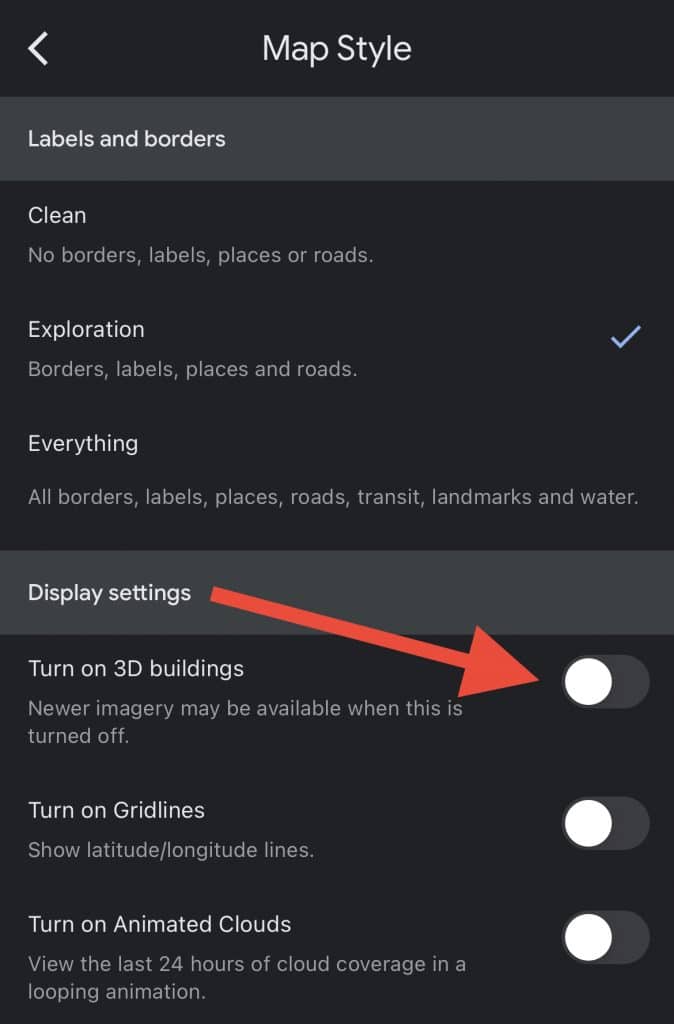
The next thing you will want to do if you take satellite roof measurements is uncheck the 3D Buildings option underneath the “Layers” menu on the bottom right-hand side of the screen.


Screenshot of Google Earth Settings for 3D Buildings

It may not be automatically checked, but you should double-check anyway because having this setting on will interfere with your roof satellite roof measurements. 


Find Your Building

Now, you are ready to locate the building with the roof you are trying to measure. On the top left side of the screen, you will see a search field.


Screenshot of Address Search on Google Earth App

All you have to do is enter the address of the building you are trying to take measurements for and press Search. 


From here, you should be able to see a bird’s eye view of the building and, more importantly, its roof. Now, you can zoom in on the roof. Using a computer and mouse, you can rotate your scroll wheel to zoom in on the roof. 

You will also see a zoom tool on the right side of the screen. You can click on the “+” end to zoom in. 

You will have to keep the roof centered on the screen as much as possible to get accurate satellite roof measurements.

To do this, hover the cursor (in the case of Google Earth Pro, the cursor is a hand) over the center of the roof, click it, and move it around until it’s as close to the center of the screen as possible. 


Align The Roof

For the easiest measurements, you should align the longest edge of the roof so that it’s parallel with the top of the screen. To achieve this orientation, you may need to rotate the image. 


Screenshot of Google Earth Rotate for Alignment

A circular “rotate” tool in the top-right corner will allow you to rotate the image clockwise and counterclockwise. Click it until you get the optimal orientation. 

Measure The Roof

On the left-hand menu, click on the option for “Tools.” Then, check the box next to the option “Ruler.” This will open up a prompt with the option for something called “Polygon.” Go ahead and click on Polygon. 

This will give you an option to select measuring units. You should go ahead and choose feet and square feet. 

Now, you’re going to want to drag the ruler box out of the field of view (the part of the screen that actually displays the image of the roof. Move it to the left so it is completely out of the way of the field of view, but be sure not to close it. 

Hover back over the roof image, and you will see that your cursor is now a little square. Align the square into one corner of the roof and click and hold your mouse. 


Screenshot of Google Earth Measurement Process

Now, while still holding down the mouse button, move to the second corner of the roof. Continue this process until you have rounded the entire perimeter of the roof. 


Getting The Roof Area

Once you’re done covering the roof’s perimeter, take a look at the little “Ruler” option box that you dragged out of the way. It should give you the area of the roof. 


Screenshot of Roof Area from Google Earth App

Now you’re done! You can repeat this process to get satellite roof measurements for any flat roof!


FAQs about Measuring Roofs With Google Earth

How Accurate are Google Earth Roof Measurements?

Google Earth is good for estimated measurements. However, you should still conduct professional field measurements before ordering more materials. The goal is to remain within your budget and get the job done.


Are There Video Tutorials for Google Earth Roof Sattelite Measurements?

Yes, several YouTube videos outline how to measure your roof on Google Earth. Sometimes, seeing a real-time video can make the process easier. Here’s one example of a video that outlines the process


SEO for Roofers in Phoenix: The Ultimate Guide for 2024


SEO for Roofers Phoenix (Guide Cover) (Showing Phoenix Building)


SEO for roofers in Phoenix is an essential digital marketing strategy for Arizona roofers.

At Roofer’s Guild, we know this first-hand, having worked with dozens of roofers in the Phoenix metropolitan area.

Compared to other options like PPC and Facebook Ads, SEO produces the best digital marketing ROI when appropriately done and fosters a sustainable stream of incoming roofing leads.

The key is correctly implementing search engine optimization, which you can learn how to do in the following guide.


What is SEO for Phoenix Roofers?

Phoenix roofing SEO is the intentional strategy for improving Phoenix-based roofing companies’ search engine rankings. The primary goal of SEO is to rank a roofing company website and Google Business Profile for local and industry keywords. 


SEO Basics for Phoenix Roofing Companies

At a bare minimum, Arizona roofers need a website and Google Business Profile to utilize SEO properly. Websites require a domain name, hosting provider, and content management system to publish, while Google Business Profiles can be claimed and verified through Google’s platform.


Phoenix Roofing Company Website

A company website is the foundation of SEO for roofers. Good websites have service pages, blog posts, and other content assets that rank on Google search results.

Furthermore, the best websites have urgent calls to action that convert organic traffic into viable leads.

Content is vital to ranking a website on search results. However, technical SEO aspects like site speed, URL structure, and user experience also factor into search engine optimization.

Search engines want their users to find the best websites with the best content so that they come back to the search engine for other queries.


Phoenix Roofing Website Screenshot

Domain Name

SEO requires a legitimate domain name to work, preferably of the .com variety. Domains typically cost between $2 and $20 per year and can be purchased on domain registrars like GoDaddy, Siteground, Namecheap, etc. Domains with Phoenix and roofing in the name have a better chance.


Hosting Provider

Web hosting costs anywhere from $2 to $500 per month, depending on your needs. However, most Phoenix roofers can spend less than $100 per month on hosting to ensure fast website speed and good security.

You can buy hosting from the same platform where you purchase your domain name, or you can use an alternative provider.


Content Management System

Your content management system or CMS allows you to publish content on your website, install plugins, and upload media.

At Roofer’s Guild, we recommend WordPress CMS because it makes everything easy for roofers. If you choose to go another route, consider Duda or Squarespace.


Google Business Profile

The second most crucial SEO asset is a Google Business Profile. A GBP (formerly known as Google My Business or GMB) is a free listing from Google that roofing companies can verify through a postcard. Google needs to confirm that your business address is accurate and truthful.

Once you claim and verify your Google Business Profile, it can begin ranking on Google’s Local Map 3-Pack and Google Maps results. Connecting your company website to your business profile can boost its SEO potential.


Roofing Business Profile Phoenix

Optimizing your profile with images, content, and a complete profile can improve its rankings for relevant search queries.

Verification

Once you submit your address on Google Business Profile, they will mail you a postcard for verification. The postcard will contain a unique verification code that you can input into your profile where it says code. Once you insert your code, your profile can go live and start ranking.


Reviews

Your Google Business Profile also serves as a place where customers can leave reviews. Getting more reviews helps your GMB listing rank higher and for more keywords.

You can send customers a direct link to review your business via Google, increasing review frequency.


Optimization

Complete your profile fully to optimize your GMB listing for SEO. Make sure to upload photos of your staff, input the correct hours of operation, and write up a high-quality business description.

You can even take it further by publishing Google Posts and listing each of your services.


Advanced SEO Concepts for Phoenix-based Roofers

As a Phoenix roofing contractor, you want to bring in local consumers who need roofing services. These potential customers may search for location-specific terms like roofing company phoenix or implied local terms like roofing company near me

If the user searches from a Phoenix zip code, Google will recognize both terms as synonyms. In addition, Google’s local algorithm is advanced enough to understand that when users add near me to their search query, they seek a service near their search location.


Screenshot of MOZ Keyword Explorer for Phoenix Roofing Terms


Keyword Research

Keyword research is the basis of your SEO rankings as it allows you to target specific terms and phrases that your target customers use when searching on Google and other platforms.

Most keyword research tools like SEMRush, Moz, and Ahrefs allow you to evaluate monthly search volume. You can also measure keyword difficulty and estimated CTR.


Content Publishing

Content takes your target keywords and submits them to Google’s index through service pages and blog posts. Your content should insert keywords in the title, H1, H2, meta description, and URL.

Aside from inserting the exact term or phrase into your content, you should supplement it with synonyms and ensure readability for users.


Link Building

Local roofers with links from credible institutions like the Arizona Roofing Contractor’s Association are more likely to rank than those without solid links.

Inbound links serve as a digital endorsement from one website to another. You can build links by building relationships with trustworthy companies and programs. Creating good content may also earn links.


Reputation Management

Modern customers check reviews before investing in roofing services, and search engines like Google know it.

As a result, companies with reviews from Google, Facebook, Yelp, Better Business Bearue, and other credible review platforms are more likely to rank than those without a reputation.

You can increase reviews by reminding your customers to submit them.


Local SEO Strategy for Phoenix, AZ Roofing

Local roofers have less of Google’s index to worry about than national companies. You don’t need to rank for national keyword terms or get links from national institutions.

In some ways, Local SEO is easier, but it does require a few extra steps in the search engine optimization process.


Screenshot of Phoenix Yelp Listing for Roofer


NAP Citations

One overlooked aspect of Local SEO is NAP citations. These are also links, but they are called nofollow links and differ from the links we described earlier.

You can create these links manually by submitting your website to business directories like Angi, HomeAdvisor, and BBB.

You can also use a service like Whitespark to automate your citations across thousands of platforms. Of course, such a service costs a fee but vastly expedites the citation creation process.

Aside from listing your business on multiple platforms, you want to ensure consistency and accuracy.


Local Landing Pages

Although Google Business Profiles are the best way to rank for local terms, you can also rank for them on your primary website. You achieve this through local landing pages, AKA city pages. 

Creating unique city pages allows you to rank in Phoenix along with Tempe, Glendale, and Scottsdale. As a local roofing contractor, you likely serve customers in nearby zip codes and would like to get their business.


Social Proof

Showcasing local awards and badges on your company’s website is another overlooked aspect of Local SEO in Phoenix. Any local honor is worth sharing on your website, not just for SEO purposes but for conversion rate. When consumers see badges, they see credibility.

If you are a newer roofing company without awards, try to network with local associations and build a following. As your brand grows locally, you are more likely to receive opportunities to earn badges, awards, and more.


Final Words on SEO for Roofers in Phoenix

SEO gets a bad reputation in the valley because of bad actors in the industry. At Roofer’s Guild, we recommend selecting from our list of the best SEO providers. It’s true that some agencies do lousy business and will cost your business long-term, but SEO can also provide substantial ROI in 2024.

The key to successful SEO is understanding the processes outlined in this guide. You will likely find sustainable success when you implement SEO in Phoenix from an informed and educated position.


7 Effective Tips for Roofing Postcards, Flyers, and Direct Mail


Roofing Postcards (Blog Cover)


When it comes to roofing postcards, the questions are simple. Does direct mail still work for roofing companies? Are roofing flyers worth printing and distributing to local homeowners? Roofing contractors want to know these answers before investing capital into producing these marketing materials. 

As for the numbers, consumers generally like receiving direct mail, and it’s reflected in the statistics. For example, approximately 73% of American consumers prefer direct mail contact because they can read it at their convenience.

Like most other marketing strategies, these tactics work when done correctly. As a result, Roofer’s Guild will outline seven helpful tips for maximizing your roofing postcards, flyers, and mailers in 2024.


1) Keep your Options Open

Roofing is a very seasonal business. When the rain, snow, or hail is falling, you probably have no shortage of leads. However, when the skies clear up, you may find that your phone goes silent. This is why it’s a good idea to have a couple of roofing postcard templates ready to go as the weather dictates. 

For example, you can have one template that speaks explicitly to the needs of people dealing with snow, rain, or hail damage.

For example, an image of a snow-covered or leaky roof may be just what you need to get people thinking about the condition of their roofs in the winter. 

So, this template would be great to send out to the local market during winter. But what about springtime?

This is where a second postcard template comes in handy. To keep the jobs coming in fair weather, have a postcard template that you can deploy in the off-season. For example, spring and summer have been identified as the best time for people to buy homes

And what do people need when they list or buy a home? Roof inspections/repairs, of course! For the off-season, think of knocking up a postcard that promotes your roof inspection and repair service.

Maybe include an image of an old, shabby-looking roof to get people to consider the current state of their own roofs. 


Roofing Postcard Example


2) Use Analytics

Neighborhood or regional analytics can be beneficial in your direct mailing campaign. Using these analytics tools will make your campaign more effective and efficient. 

Suppose you are blindly sending out roofing postcards to the local neighborhoods. In that case, you are probably wasting a good amount of money. On the other hand, printing and sending mailers aren’t cheap, so neighborhood analytics is essential. 

Don’t send your roofing postcards to new housing developments because they will already have brand-new roofs installed.

Instead, use neighborhood analytics to help you find areas with older homes that are more likely to need some kind of repair. 

You can also check out which areas of your city or neighborhood are most affected by adverse weather. Targeting these areas may yield the best ROI for your direct mailing campaign. 


3) Personalize the Message

As much as possible, make the copy of the postcard personal. Of course, the easiest way to do that is simply using the recipient’s name. But you can also personalize the message. For instance, you can customize the messaging based on the customer’s previous services, i.e., shingle repair.

Think about the everyday roofing needs that follow after their paid service. Or think about the common concerns after they paid for that specific service and tailor your message to those concerns. 

On the other hand, avoid using trickery like printed text that emulates handwriting. People aren’t as susceptible as marketers make it seem. If anything, most people will resent your attempt to trick them and tear your mailer to shreds with a look of disdain and disgust on their faces.

Keep your personalization transparent and straightforward. Of course, you should have records of everyone on your mailing list, including which services they’ve used and inquired about. 


4) Utilize Relevant Imagery

People in a neighborhood with smaller homes probably won’t respond well to roofing postcards with images of decadent estates. However, you will know where the postcards are going in most cases, so make sure your imagery is relatable to the recipients. 

As much as you can, make the homes used in your postcards look like the homes of the people receiving them. For example, many royalty-free image websites feature pictures of residential homes.

The idea is to connect with the recipient by communicating your understanding of their specific needs. For example, suppose the images on your mailer match the style of home they currently reside in. In that case, you create a non-verbal trust indicator.


Roofing Flyer Example


5) Focus on Text

The text of the postcard is just as important as the images. One tactic that we have seen work for many roofing companies around the country is simply including the name of the city or neighborhood. 

People respond more when they see a local company instead of some faceless, giant national roofing chain. Mentioning the name of the city or neighborhood, or even just mentioning that yours is a local roofing company, will make your company more natural.

The text should be concise and get to the point quickly. Homeowners don’t want to read a novel and are quick to toss your mailer in the recycling bin. To capture their attention, get to your punchline within the first sentence.


6) Include an Offer

It never hurts to include a special offer on your postcard. This immediately gives more value to the piece of paper that consumers get in the mail. Instead of just a piece of roofing mail, they will view it as having value to them, even if it’s not immediate value. 

When an offer is included, people tend to keep postcards around instead of throwing them away. These offers are called calls to action on a digital ad or website promotion, but the same logic applies to mailers.

Homeowners get their fair share of junk mail, making an urgent CTA essential to avoiding a toss into the trash can or recycling bin. Your best chance will be with legitimate offers rather than ones that mislead the homeowner, who may fail to read the fine print.


7) Multi-Channel Roofing Marketing

Roofing postcards are an excellent strategy for marketing your company locally. But for the most effective approach, you have to target your customers everywhere they are. 

Consider professional roofing SEO and digital marketing services so your postcards have a more significant impact.

The numbers don’t lie: roofing postcards and direct mailers should still be a part of your general marketing efforts. However, most homeowners will research your company further by searching its brand name on Google.

As a result, failure to implement SEO and reputation management may negate the impact of your mailers, even if you properly design them. In 2024, multi-channel marketing will foster trust and increase conversions.

But just because direct mailers and roofing postcards are older and conceptually easier to understand than SEO doesn’t mean you won’t hit a creative speed bump.