Author Archives: Roofers Guild

Roofing Diagnosis 101: Metal Roof Leaks Around Screws

When it comes to roofs, there are few products that can match the strength, durability, and performance that a metal roof can offer. But like just about anything else, metal roofs are not indestructible, and they definitely can spring leaks. Here are just a few things to look for if your metal roof is beginning to leak.

Metal Roof Interior

Knowing where and how to identify leaks in a metal roof is the first step towards implementing the repairs that you will need to get your roof back into working order.

Metal Roofing Screws

More often than not, if you have a leak in your metal roof, a metal roofing screw is the culprit. When installed properly, metal roofing screws will seal out the water by compressing a rubber washer down at the base of the screw head.

When the screw is then driven down into the metal roofing panel, the rubber washer will form a gasket of sorts between the roofing panel and the screw head itself.

While this sounds like a simple process, there are definitely things that can go wrong, and we will go over a number of those later in this piece. The key is to know that when you have a leak, you should go for the site of the metal roofing screws before checking out anything else.

Here are a few of the ways that a metal roofing screw can lead to a leak in your metal roof.

Under Driven Screws

This can happen when you don’t have enough torque on the screw as it goes into the metal roof itself. What causes the leaking is that the rubber washer does not properly seat against the metal roofing panel. When this happens, the rubber part of the screw is never compressed, and there is no gasket seal that is formed.

This can typically be remedied by tightening down the roofing screws with additional torque. This might not resolve the issue every single time, but it likely will solve the issue the majority of the time. This is one of the easier fixes that you can implement when your metal roof springs a leak, particularly around the metal screws.

Overdriven Screws

This is the other end of the spectrum. In an effort to ensure that the tight seal between the screw head and the metal roofing panel has been met, the screw can be overdriven into the metal roofing panel. This can lead to damage to the roofing panel itself, which presents other problems that may need to be addressed.

The added torque generally breaks the rubber washer and makes it spin out to the side, preventing the sealing necessary that keeps the water from leaking down into the hole.

Metal Roof Leaks Around Screws

In some cases, you can simply take some of the torque off of the screw; in others, the screw may be stripped, and there could be pressure damage to the metal roofing panel itself.

Screw Driven At Wrong Angle

Again, the key to a successful screwing of the metal screw is getting that seal. When you screw down at the wrong angle, there is nothing for the rubber washer to sit flat against. This will result in the seal not taking effect and leaks persisting around the area.

When something like this happens, you can generally unscrew your driven screw and use the proper torque to re-screw it in. You know you have done it properly when the rubber seal sits flush against the metal roofing panel and keeps the water from leaking through.

This is a pretty easy fix as, in most cases, the screw will not have done any damage to either itself or the metal roofing panel. Simply unscrew the current installation and make sure that you screw it in again so that it sits flush with the panel.

Screws That Missed Wood framing or Strut

When something like this happens, the screw has nothing to seal against, and leaks can be hard to find because many times the screw is right there, but without actually touching it you wouldn’t know that it didn’t actually seal or hit anything.

Always double-check to ensure that the screw has been sealed properly and grabbed onto the strut or wood framing below. You can save yourself a ton of trouble by double-checking your work each time and won’t have to revisit a leak area caused by inefficient screwing.

Faulty screws

While it isn’t the most common of causes that there are, you could find yourself having leaks after a proper installation simply because the rubber washer might not be safe or complete. It is also important to check on the screws after each season because hot summers followed by frigid winters are likely to be unkind to those rubber washers.

Over time, and with temperature changes, can degrade those rubber washers and make them lose their seals. When something like this happens, it can be difficult to find a difference between where the screws are leaking and where they are not.

How To Prevent Leaks Created by Metal Roofing Screws

It is essential that you double-check your work before walking away from the roof. Screwing in a screw with too much or too little torque can be a common cause, as can a screw that is placed at an improper angle.

When you double-check your work, you ensure that there are no screws that will slip by you, and you should not have to deal with leaks.

But should there be leaks in your metal roof, you have a pretty good idea that the metal roofing screws are the culprit. Take a look around, inspect those screws, and make adjustments where you need to.

Leaks in your metal roof don’t have to be a catastrophe. Taking proper care and using common sense can save you a lot of headaches and hassle and leave your roof standing up to the test of time and those pesky leaks.

Hail Size Roof Damage Chart


When a storm rolls through your town, there are a lot of things that can do damage. Heavy winds are the usual culprit, but hail is another type of storm that can do significant damage. The most recent annual data estimates over 3,700 hail storms in the United States.

After these storms, it’s handy to have a hail size roof damage chart at your disposal, like the one below:


Hail Size Damage Chart

Key Takeaway

Any hail larger than a ½ inch can damage a roof, meaning ¾-inch to 1-inch hail (quarter size) and 1 ¾-inch to 4 ½-inch hail (golf ball size) should prompt a call to your insurance company.


Assessing Roof Hail Damage by Size

When hail grows in size, you can be concerned about things like your car or, even worse, your roof. The costs can be heavy when there is damage to your roof. Even minor damage can cost thousands of dollars, and most of us do not have that kind of money lying around.

They say they are there for us when disaster strikes, but most insurance companies will find any reason not to pay out a claim. After all, it is how they strengthen their bottom line.

When hail becomes a concern, it can help to know what size hail can damage your roof. Again, not all hail is worth worrying about, but when those bigger chunks begin to hit, you can wonder what to do. Inspecting your own roof is dangerous, and you may not know what to look for.


Most people won’t be able to manually measure hail during a storm, so you can estimate using common identifiers like “golf ball size” and “marble size.”


Understanding which hail sizes can damage your roof gives you a good idea of when to call in an inspector to check for damage on your roof. Here are a few of the most common hail sizes that damage roofs nationwide.


¼-inch Hail (Pea-sized Hail)

Milder hailstorms generally produce this size of hail, but only for a few minutes at a time before it shifts over to steadier rainfall. When dealing with this size of hail, a roof can often fair pretty well.

Use some common sense and judgment before jumping to any conclusions.If you have an older roof with existing damage, pea-sized hail could exacerbate the present damage. Be aware of the condition of your roof before judging whether it needs an inspection after a hailstorm.


½-inch Hail (Marble-sized Hail)

Marble-sized hail can also fall into the safe zone when it comes to hail, meaning it generally doesn’t cause damage to roofs that don’t already have substantial damage. 

Remember that hail is produced by updrafts of wind that shoot raindrops higher into the atmosphere. It freezes when it gets higher into the atmosphere and then falls back to Earth.

When you have more extreme winds, the hailstones will generally be larger. While the quarter-inch-sized hailstones might not be of much concern, exercise caution and common sense again.

If you have any thoughts that there might be damage to your roof, call in an inspector immediately.


¾-inch to 1-inch Hail (Dime to Quarter-sized Hail)

You should call an inspector immediately when you see hailstones larger than the ½-inch described above. Finding a reputable local roofer is a great place to start, and you also need to make sure that you place a call to your insurance agent.

Hail this size generally damages roofs in the form of dents and cracks, though in some cases, it can definitely cause greater damage.

Do not leave this unaddressed. As expensive as it can be, if you leave the damage unaddressed, it could become a more expensive, extensive, and potentially dangerous condition to live in.

In any event, you must talk to your insurance agent immediately. Knowing what your policy covers and what might be paid for can help you determine your budget and which contractor to use.

Part of the headache of dealing with damage to your roof is dealing with the insurance company; try to get that duck in a row as soon as possible.


Once hail size approaches 1 inch, you will most certainly have roofing damage of some form. It’s important to contact your insurance company as soon as possible.


1 ¾-inch to 4 ½-inch Hail (Golf Ball-sized Hail)

While not an uncommon hail-size range, golf ball-sized hail can still substantially damage your roof, car, and home. Like with dime-size hail, you should contact your insurance agent by phone to discuss your options.

Agents might send a roofer to determine the overall damage before proceeding. Your policy may cover a portion of the damage your roof sustained.

Hail can be a nasty beast, even if it only occasionally rears its ugly head. Whenever there is hail in your area, you must assess the size of the hailstones first and foremost. Under ¾-inch, you are probably fine unless your roof already has substantial damage and age.

Anything larger than 1/2 inch should prompt you to discuss the next step with your insurance agent and find a roofing contractor to inspect your roof.


The Bottom Line for Roofs With Hail Damage

Being calm and knowing the steps to take when a hailstorm hits your area can make all the difference in the world when trying to get the necessary repairs done.

The key is not to panic and not jump to conclusions. Make sure that you take all of the proper steps so that you can not only get your roof repaired but get it done in a cost-effective way.

Because hail damage leads are often hot items for roofers, cities recently hit by storms will be ripe with them. Be aware of whom you’re dealing with.

If you are unsure whether or not your roof was damaged by a hail storm, getting an inspection is the best option. Even if the hail is around 1/2 inch in size, it can exacerbate existing problems with the roofing system.

When hail is larger than 1/2 inch, including quarter and golf ball size, your roof is almost certainly in danger. The more quickly you address damage from hail storms, the less future complications arise.


Impact Resistant Shingles vs. Regular (2024 Update)


Impact Resistant Shingles vs Regular (Blog Cover)

Impact-resistant shingles famously provide a strong defense against wind and hail. But are impact-resistant shingles that much better than regular ones? The following post explores the true value of this roofing protection and whether it is cost-effective for business owners and homeowners in the U.S.


Roofer’s Guild examines:


  • Practical applications for impact-resistant (IR) shingles in a commercial setting
  • Financial incentives vs. requirements for adopting IR
  • General composition and design of these enhanced materials
  • Key players in the IR shingles market

Daylight Shingle Perspective (Screenshot)

Key Takeaway

Impact Resistant Shingles withstand the trauma of hail strikes without breaking, making them worthwhile for homeowners in hail-prone climates like Texas and Florida.


What is Impact Resistant Roofing?

Impact resistance is a material’s ability to withstand the force of an object striking it without breaking.

In roofing, an impact-resistant shingle can withstand the impact of a moderately-sized hailstone falling at up to 90 miles per hour.

The specially crafted material distributes the force so effectively that it leaves the shingle without cracks. Such distinctions make the rating system crucial for residential and commercial building protection.


TAMKO Heritage IR Line (Screenshot)

A Look at IR Shingles From the TAMKO Heritage Line. These Feature Class 4 Impact Resistance.


Identifying Impact Resistant Shingles

Like many building materials, shingles and other roofing products are rated by their impact resistance. Material rating specialists classify them on a scale of 1 to 4, with Class 4 materials showing the greatest resistance. Keep in mind that not all materials are rated for impact resistance.

Two key organizations govern the rating system and submit classifications for new materials. These are Factory Mutual (FM) and Underwriters Laboratories (UL). Underwriters Laboratories is particularly famous for its testing and classification systems for impact and fire resistance. 

Their standard, UL 2218, created the Class 1 – 4 rating system. Most manufacturers follow this standard for rating their materials, and you can easily confirm classifications on their company websites.


Key Benefits of Impact Resistant Shingles


Enhanced Weather Defense

With enhanced impact resistant shingles, your building has ample protection against both hail and would-be leaks. That means fewer visits from your roofing contractor and more occasional calls with your insurance agency. Of course, there are also thousands of dollars in savings.


Extended Shingle Lifetimes

Your average asphalt shingle comes with a lifetime of 15 to 20 years. That’s assuming the material endures years of solar radiation, hail trauma, pests, and other threats. On the other hand, impact-resistant shingles often last up to 30 years. That’s a decade more of additional protection.

If your business prefers to make longer-term investments, IR shingles could be a great call. Their hardened exterior makes them much more likely to last the full length of their estimated lifetime too. Compare shingles from different manufacturers to find the maximum investment impact you desire.


Improved Cost Effectiveness

Combine a longer estimated life cycle and superior weather protection, and you have the makings for some impressive cost savings. 

While impact-resistant shingles may run 10 to 20 percent higher than traditional asphalt varieties, that cost spreads over a longer lifetime. 

Since only the most severe storms can inflict significant damage, your chances of early replacement during those 30 years are wonderfully slim.

If your building insurance company offers rewards for high-grade IR shingle installations, you can add even more savings into the equation.

Many insurance agencies publish a list of roofing materials that qualify for credits. Here’s an example from State Farm.


Impact Resistant Shingle Design

Shingles may incorporate any number of alternative materials for added strength.


Some of the most commonly found additions include:


  • Plastic
  • Specialized resin
  • Copper
  • Aluminum

Owens Corning Shingle Makeup (Screenshot)

Copper is One of the Many Durable Materials That an IR Shingle May Employ. Source: Owens Corning


Metal shingles are incredibly popular for their outstanding defense against weather threats. In lighter colors, they produce a reflective barrier against sunlight.

With the subsequently reduced heat gain, business owners (or homeowners) earn incredible energy savings during daylight hours.


IR Shingle Manufacturers

While there are plenty of names to choose from, below are four of the most prestigious IR shingle roofing brands.


TAMKO Building Products

TAMKO offers several options, including the Heritage IR shingle line. These TAMKO shingles utilize a polyester mat for additional reinforcement against impact trauma. The extra mat also strengthens the shingle’s common bond areas and sawtooth. 

The seasoned company offers a Limited Lifetime Warranty plus a 10-year coverage period to repair or replace any shingles with manufacturer defects. 


Owens Corning

A world-renowned manufacturer in roofing and other building industries, Owens Corning knows how to create dependable products.

Owens Corning shingles from the Duration STORM line feature polymeric backing for more robust protection against impact trauma. Their SureNail Technology also produces a much firmer grip than the average commercial shingle, offering great defense against uplifting wind force. 

Owens Corning shingles come in various colors, from Antique Silver to rich Brownwood. Like other top manufacturers, the company also provides a Limited Lifetime Warranty for its IR shingle products.

Finally, the Duration STORM IR shingles come with algae-resistant StreakGuard, a very helpful feature in consistently high humidity areas.


CertainTeed

Institutions often recognize CertainTeed for its generous warranty provisions and as a trendy brand among residential and commercial property owners. Like most manufacturers, the company offers a limited lifetime warranty (transferable).

Not to be outdone by TAMKO, CertainTeed shingles in the Landmark IR line also come with a 10-year SureStart warranty, covering any labor and replacement costs incurred due to manufacturing defects. On top of that, CertainTeed also offers a 15-year warranty for wind resistance (up to 130 miles per hour).

CertainTeed’s fiberglass design also comes with a Class A fire-resistance rating (the best) from Underwriters Laboratories, making it an attractive option for security-conscious business owners.


GAF (Timberline)

GAF takes the three-dimensional aesthetic design further with its unique feathering technique, which instills a stronger feeling of depth in a commercial rooftop.

GAF’s ArmorShield II SMS Modified IR Shingles incorporate this beautiful “shadow band” element while maintaining a powerful shield against impact trauma. The result is an equally stylish and robust rooftop.

This line of GAF shingles also features StainGuard protection against algae growth, keeping your roof vibrant and stain-free. 

ArmorShield II boasts a 4.3/5 contractor rating on Research Roofing, with exceptionally high marks for durability and longevity. 


Research Roofing Shingle Rating (Screenshot)

Consider Whether Durability, Longevity, Customization, Color Options, or Aesthetics are Most Important to Your Business.


Choosing Your IR Shingle


Design and Color Options

Asphalt shingles are a well-established solution among homeowners and commercial organizations.

Because of their popularity, manufacturers produce dozens of attractive options that cater to your exact color tastes. They also come in many different styles for a more visually stimulating appearance.

With impact-resistant shingles, however, manufacturers often have limited options available. Of the four brands we mentioned earlier, each company offers less than ten color schemes.

Architectural shingles provide a sense of depth but also face the same color restrictions.


Storm Resistance & General Durability

Impact-resistant shingles are remarkably tougher than your garden-variety asphalt products.

If you install one of these enhanced roofing systems, you can expect little to no damage during moderate hail storms.


Price Vs. Payoff

From a financial perspective, paying 10 to 20 percent more during your next roof replacement may feel high. With that said, IR shingles typically last a full decade over traditional asphalt shingles.

They also have fewer (if any) instances of damage requiring early replacement. Your company may also qualify for incentives with your building insurance company.


Final Decision on Impact Resistant Shingles

Impact resistant shingles are superior to regular shingles, particularly in storm-heavy climates like Texas and Florida. You can expect the higher-grade shingles to last at least a decade longer than its counterpart.

Furthermore, damage caused by hail and other severe weather events is almost always more expensive than investing in the sturdier shingle.


How To Build a Greenhouse Roof in 2023 (Step by Step)

How To Build Rooftop Greenhouse (Blog Cover)

Logo

Step By Step for Building a Greenhouse Rooftop

  1. Gather Supplies
  2. Build a Base Deck
  3. Apply Plastic Covering
  4. Implement Hydroponic System
  5. Create Planter Boxes
  6. Create Pant Buckets
  7. Start the Process With Water and Nutrients

Many people want to know how to build a greenhouse roof. More and more these days, people are investing in their own greenhouses. This is for a variety of reasons. Most importantly, you can grow a considerable amount of food in a greenhouse.

This would not only save you a little bit of money over having to purchase your vegetables, but it would save you a trip or two to the grocery store as well. Sometimes, the latter is invaluable.

There is, of course, the matter of hydroponics. Regardless of what side of the fence you may reside on, marijuana is becoming legal in more and more states, and there is a real market for growing your own.

Even if you are looking to dabble, having a greenhouse would be a great way to see what you can grow and in what quantities. The thing is, building your own greenhouse can be a bit difficult if you have no idea what it is you are doing.

Finding the right supplies can be difficult without the proper knowledge. Having space is difficult enough; don’t go through the process without a little bit of knowledge about how to get it done properly. The goal is to ensure that you set up a system that is as simple to use as possible.

You want to make it so that maintaining it isn’t a huge chore, and you can have productive growth each time you use it. This all lies in the construction.

Thankfully for you, you have a helpful guide right here on how to safely and accurately construct a greenhouse on the rooftop of your home or apartment building, so long as you have the right clearance beforehand.

Follow these steps, and you can grow so many things in your new greenhouse.

Step 1: Get Supplies

You will need to get several things beforehand to ensure that you properly construct your rooftop greenhouse.  Start with:

  • 18x plastic pots
  • 3x 100lt plastic boxes
  • 5x standard 2×4 wood
  • 1x3m aluminum profile
  • Some thin wood strips
  • 14x small plastic containers (you can also use recycled containers)
  • 2x 19lt buckets (again, you can also use standard buckets like paint buckets)
  • 6m x 6m greenhouse plastic (be certain that it has a UV coating; otherwise, it will degrade quickly)
  • Annealed wire, a small roll
  • Vermiculite substrate
  • 3x metal grids of 120mx60m
  • The necessary nutrients for the vegetables or plants you plan to grow (if you plan to grow hydroponics, that will require separate nutrients)

This isn’t 100% a science; if you think you can apply other items instead of something on this list, that is entirely your call. Just make sure that those materials can serve the same purpose. Otherwise, you’ll have a point of failure that you might not be able to get around. The key to any project is ensuring that your materials are of the quality that you need to do a quality job.

Step 2: Build a Base Deck

If you are building your greenhouse on top of your roof, one of the things that you want to do is to allow airflow into your greenhouse and prevent humidity problems for the roof below.

For this reason, you need to construct a wooden deck to act as a buffer between the roof itself and your greenhouse.

This is especially important if you are doing this on top of an apartment building; the last thing you want to do is screw the roof up and wind up owing people money.

Rooftop cage

Ensure proper airflow can enter your greenhouse, which will prevent humidity. You’ll need a wooden deck to serve as a buffer between the roof and the greenhouse.

To construct the deck, you would need to use six segments of 2”x4” 120cm wood connected on top with as many as 15 strips of thinner wood; what type of wood is up to you? Just make sure that it is sturdy and durable.

Remember that you will be standing here, so ensure that the spacing is small enough to take your steps safely and comfortably.

Use 3” nails on each node to secure them together, and you have a floor for your greenhouse that will be safe and secure and prevent any issues with the rooftop below.

Step 3: Plastic Covering

There is one thing worth noting: some apartment buildings will offer a mesh caging for you to use as the basis for your greenhouse. If yours does not have this, you will need to build the framing for your greenhouse.

Once your framing or caging is in place, it is time to take on the most important step: covering everything with plastic.

Make sure that you measure the cage or your frame and cut out the plastic to the proper sizing, making sure to add in the neighborhood of 20cm on each side to ensure that you get the necessary fit and closure. Remember that the plastic is thin and can be easily torn if not correctly fixed.

To prevent tearing in the plastic, place a strip of wood on the corner from the inside portion of the plastic and then secure that strip to the cage or frame with a few pieces of that annealed wire that you bought.

It will pierce through the plastic and tie tightly on the other side. Make sure your plastic is snug but won’t rip, and you have one of the most important aspects taken care of.

Step 4: Implementing a Hydroponic System

The term “hydroponics” has a certain meaning attached to it, but really it just means that plants are being grown in a medium that will ultimately provide no nutrients to the plant but will allow them to soak their roots in a solution of nutrients that will provide the necessary amount of nutrition to the plant.

This method ensures that the plant’s nutrition is properly adjusted and controlled while also allowing the plant to absorb the nutrients as easily as possible. This helps to improve the growth speed and helps to boost production.

Simplicity is the key here. You would want to have containers where the water and nutrients sit and create a platform or container above where the plants could sit. This would allow the roots to grow down and into the nutrient solution instead of simply sticking the roots into the nutrients.

However you choose to create this system, this will allow for ample nutrient soaking, and you can even leave your greenhouse unattended for a couple of weeks at a time as they continue to soak in those nutrients. There is no science to this; it is a matter of finding what you like.

Step 5: Making Planter Boxes

Now comes the time to create your planter boxes. You should have six or so plastic pots, a box of around 100lt, and a single 100cm aluminum profile.

For this, you would want to lay out the six pots on the lid of the box and mark the center of each one. Then, drill a hole in each of the marks. Use a Dremel next to cut a circle around it that is the right size.

With each pot, drill many small holes in the bottom so the roots can grow out and get into the water. Lastly, you would need to add the aluminum reinforcement across the very bottom of the lid to support the plants’ weight.

The plants will grow in size, thus making them heavier, but you have improved the overall strength of the box to support that additional weight when they become much larger.

Step 6: Creating Pant Buckets

This is very similar to the last step, but it is scaled down a bit. For this, you would need that 19lt bucket and the seven small plastic containers that you could even get by recycling them. This process is a bit easier because you are dealing with slightly smaller buckets instead of larger boxes.

Creating your bucket planter.

Step 6 involves creating plant buckets using a 19lt bucket and seven plastic containers. It’s an easier step because you’ll use smaller buckets instead of larger boxes.

Start by marking the center of each pot and drill a 3” hole. After that, drill several small holes. The most important thing is that you need to paint the buckets black.

The paint color is important because it will prevent the light from reaching the nutrient solution below, which would ultimately cause algae to grow. This would lead to a depletion of the nutrient solution and could make it rot.

This is a quick, easy portion of the process and something you can play around with a little bit. Find the look and feel for your containers that you feel would best suit your plants, and you can feel better about how they will grow over the long run.

Again, this is not a science; it is about personal preference just as much as it is about creating the greenhouse itself.

Step 7: Get The System Started

Remember, this is a simpler design for a greenhouse because we want it to be easy to use and maintain as well. We don’t create a greenhouse, with the thought being that we want to spend a ton of time maintaining it. We simply want to grow what we want to grow and not deal with the unfun parts.

The key here is to ensure that your containers have enough water and add some nutrients each time you refill them; some of the nutrient water will no doubt leak out each time you move things around or check on your plants.

The nutrients you use are ultimately up to you; do a little bit of research to find the right nutrient system for the plants you want to grow. Some might have a better experience with one nutrient system than others; find what you like.

Make sure to fill the container to about halfway full; the seeds will get started because the water will reach the substrate in the pots. Since substrates are super absorbent, the water will eventually make its way upward and keep everything evenly moist, allowing your seeds to sprout.

That is all that you need to get going with a greenhouse of your own! You should start seeing some results after a few weeks of nutrition for the plants you are attempting to grow.

As you continue to work on your system, you will find nutrients that you feel are better for specific kinds of plants; this will become a more comfortable and personal process for you as you go.

Again, the way that this is set up is to promote simplicity. You want to make it easy for your plants to get the nutrients they need without much work on your part. It is simply about creating the environment for your plants to thrive and letting them do the work.

When you begin seeing results, you can tweak what you want to grow based on your use and how often. When you start to feel comfortable enough, you can even start trying out things that you may not have previously considered. The system is in place to let you find success with whatever it is that you decide to grow, and you can be certain that you will succeed if you follow these steps.

Change how you eat and live by implementing your own rooftop greenhouse. You can save money on your food, create a sense of purpose and responsibility, and get the kinds of vegetables and plants you desire most without having to find someone who carries them.

Building your own greenhouse can have a huge impact on your life. Take the steps necessary to build one; you can change how you live, eat, and look at plants. It is an experience that more people are trying. Be one of those people.

Synthetic Slate Roofing: Problems, Benefits, and More


Considering its affordability and aesthetic appeal, synthetic slate roofing is an appealing alternative to its authentic counterparts.

As we know, roofing manufacturers are famous for reproducing more cost-effective versions of popular materials, and slate is no different.

Synthetic slate is popular in cathedrals, libraries, estate homes, and other places in the U.S. and Europe.


Like other roofing materials, synthetic slate presents problems, possibilities, and nuances that determine its fit for a particular project.


Below, Roofer’s Guild dives into synthetic slate roofing and whether it is the right choice for you.


Synthetic Slate Roofing (Blog Cover)


Key Takeaway

Synthetic slate roofing presents vast benefits, such as durability and longevity, as the material can last up to 100 years.


Problems With Synthetic Slate Shingles

Synthetic slats may appear faded and discolored or begin to curl. They can also come damaged in the box, primarily when lines of the corners roll up.

You can flatten these out in most cases, but it is definitely something to look out for.


Benefits of Synthetic Slate Shingles

The benefits of using synthetic slate shingles are numerous, and there is a good reason that they have become a popular alternative to authentic slate shingles.


Among the benefits:


Cost

While synthetic slate shingles are not technically slate—they are generally made from rubber and plastic—they are designed and constructed to mirror the unique, beautiful, authentic slate, but without the major cost or the installation process that can leave you with a stress headache.


Longevity

Synthetic slate shingles are designed to last longer. There will be no more cracking, no more costly and difficult repairs, just more durable, flexible, and reliable materials.


Green Building Alternative

Using synthetic slate shingles is considered a “green” building alternative, even for those that use virgin materials. Just about any type of synthetic slate can be recycled.


Durability

Synthetic slate shingles tend to be much more durable than their authentic counterparts. The synthetic variations contain advanced ultraviolet inhibitors to reduce wear from constant sun exposure.


Safety

Synthetic slate generally has impact modifiers to help it withstand storm damage. Most are certified by Underwriters Laboratories as Class 4 impact resistance, the highest level for roofing materials.

Most synthetic slates also earn the highest fire-resistance ratings – Class A – which means they are effective at fighting exposure to external fires, are not readily flammable, and do not spread fires.


Installation

Synthetic slate shingles are far easier to transport and install than most other roofing materials.

At 1.25 pounds per tile, they are far lighter than asphalt shingles and about a quarter of the weight of a standard authentic slate shingle.

Their lightweight means that even a standard roof structure is able to support these synthetic slate shingles without requiring any special reinforcement.


They are practical for mainstream construction in residential areas.

During the installation process, the synthetic slate shingles can be cut using a field utility knife and nailed into place with a pneumatic nail gun and standard roofing nails.


Comparison to Authentic Slate Shingles

Authentic slate shingles are expensive to purchase and install. In addition to the cost, authentic slate is hefty, which impacts transportation and installation.

Authentic slate shingles are also fragile, especially during the cutting and nailing process. After installation, they become particularly susceptible to cracking.


Cost of Replacing Slate Shingles With Synthetic Slate Shingles

The average roof in the United States is about 1,600 square feet. Each square of synthetic slate shingle can run in the neighborhood of $350-475 per square.

Incredibly, that pales in comparison to the $1,650-$3,000 per square cost of authentic slate tiles.

You’re looking at $$8,400 – $17,600 for a synthetic slate shingle roof and $26,400 – $48,000 for a natural slate roof of the same size.


Coupled with the durability, lightweight, and ease of installation, it is clear why so many are moving away from natural slate roofs.


Synthetic Slate Shingle Manufacturing Process

Synthetic slate shingles are made through injection molding. Petroleum-based materials are injected into metal forms cast from authentic slate.

Some brands of synthetic slate shingles use virgin plastic or rubber in the manufacturing process.

Others use recycled plastic or rubber, as well as cellulose fibers or mineral dust.


Once the molded materials harden, the synthetic slate shingle gains long-term durability.

The manufacturing process of synthetic slate shingles contributes to its lower cost and stronger durability.


Final Thoughts on Synthetic Slate Roofing

Making the switch to synthetic slate shingles is a sound long-term investment. They are meant to withstand heavy weather conditions and enjoy an extended roofing lifespan.

Ensure you have a warranty that will cover your roof in case of any damage.

After you have completed the installation process, you can sit back and enjoy your beautiful and durable synthetic slate roof for a long time.


Roof Coating vs. Replacement: What’s The Practical Choice?

Logo

Key Takeaway

Roof coatings are frequently a superior choice to replacements because of affordability, energy efficiency, and extended longevity.

A roof coating vs. replacement, What’s the more practical choice in 2023?

It’s one of the most frustrating situations to find yourself needing an early roof replacement for your building. The unforeseen expense can send budgets flying out of control! Of course, this sort of project also creates interruptions that many businesses simply can’t afford.

What if you could skip all this hassle?

In the following post, Roofer’s Guild discusses the enormous savings potential of commercial roof coatings. The restoration process offers a more convenient way to handle long-term degradation and extend the life of your current system.

If your business is facing commercial roof replacement soon, be sure to read through the post.

Helpful Tips for Building Owners

  • A coating (i.e., roof restoration) is generally much cheaper than a complete replacement.
  • Coatings provide a lucrative means of saving electricity in your building.
  • The added protection also extends the life of your roof and reduces maintenance requirements.

What are Commercial Roof Coatings?

While relatively new to the industry, commercial roof coatings have slowly become a favorite solution among businesses throughout the United States. Available in both brush-applied and sprayed forms, they cover the rooftop’s surface to create a seamless layer of protection against the elements.

Rooftop coatings were designed to address a rising tide of premature roof failures, especially among flat systems. While they had a rocky start with mixed results, commercial roof coatings matured and became a dependable solution.

Now thousands of business owners and building managers depend on these restorative coatings to preserve their rooftops.

Why Choose a Roof Coating?

Let’s say a building relies on a fairly dependable but aging TPO rooftop. Prolonged exposure to ultraviolet light, wind, and ponding water leaves the membrane cracked and scarred. You know what happens next! Leaks slowly develop in the seams and damaged areas, and moisture seeps into the building below. The building owner and/or manager face a serious dilemma:

Should the roof be repaired or replaced?

Repairs cost less but generally leave the building vulnerable to problems a few years later. Then again, an early replacement is an even less attractive option. Who wants to spend tens of thousands of dollars to replace a roof long before its projected end of life? This leads us to a middle-ground solution that takes a more aggressive path than repairs but costs far less than replacement.

Benefits of Roof Coatings

One of the most underrated benefits of coatings is their rejuvenating properties for your roofing system. The fluid carefully slips into cracks and marred areas of the rooftop surface, sealing them against further moisture invasion.

While there are limits to the number of damage coatings can mend, they do a fantastic job of fixing minor degradation on the rooftop! You don’t have to wait until long-term damage puts your roof on the brink. A solid, seamless coating also benefits newer rooftops.

Restoration Falls on the Repair Side of the Repair vs Replacement Spectrum

If your current system was installed with many seams, a thick new top layer would preserve those seams against leaks.

Coatings and Energy Efficiency

Cool roofing refers to any roofing system or solution that reduces the surface temperature of a building’s rooftop, preventing heat gain during peak sunlight hours. By incorporating highly reflective commercial roof coatings, business owners can transform a heat-sponging flat roof solution (such as EPDM) into a highly energy-efficient system. What does that mean for companies in the real world?

A cool roof coating saves hundreds, maybe thousands of dollars in air conditioning costs each year. 

Whether you depend on a black-top roof or a fading lighter color, commercial roof coatings offer a fantastic defense against preventable heat gain. For those looking to reap the maximum energy benefits from the restoration process, both polyurethane and urethane-modified acrylics offer impressive benefits for your roof’s solar reflectance rating!

Chemical Resistance for Your Rooftop

Corrosion claims countless rooftops every year. Rainwater naturally causes rust in some metal systems, gradually eating away at their lifespan. Not only does the right coating cover this unsightly corrosion, but it also protects the rooftop from further decay. Industry specialists almost always recommend protective coatings for new commercial metal roofs. 

Not every chemical threat comes from a natural source. Industrial companies sometimes vent byproducts harmful to their roofing system. Many turn to flexible, elastomeric coatings to shield their expansive rooftops from the synthetic corrosion and warping that would otherwise damage each system.

As an added bonus, some commercial roof coatings (such as polyurethane) provide additional protection against mechanical trauma from foot traffic and scraping hardware.

Equipment Edges Protected by Commercial Roof Coatings

Coatings offer great protection for areas traditionally vulnerable to leaks. As a result, leak protection is a major consideration when it comes to roof coating vs. replacement.

Find Your Commercial Coating Expert

Whether you choose coating or replacement, hiring the best roofing contractor is critical. Take your time finding the best roofing company in your area, especially one specializing in commercial roof coatings.

Check their reviews on Google Business Profile, Yelp, and other trusted reputation platforms. Furthermore, check out their company website for any images from previous commercial roof coatings.

How to Promote Metal Roofing (Ads, Marketing, Etc.)


Metal roofing represents a fantastic, often lucrative opportunity for companies across the United States.

Despite their high-ticket earnings potential, many roofing contractors simply don’t know how to promote these efficient roofing materials.

Some waste money on traditional advertising activities, while others experience zero results from their online marketing efforts.

Instead of throwing your hands up in the air and doubling down on shingles, why not develop your own low-cost, high-reward strategy for metal roofing?

The following guide outlines how to promote metal roofing in 2025 using marketing and advertising.

Our guide dives into roofing marketing channels like SEO and PPC, which can produce metal roofing leads for your business.


Promote Metal Roofing (Blog Cover)

A Quick Disclaimer

Google Search acts as a starting point for billions of consumer inquiries, including those regarding metal roof installations. Our recommendations depend upon a well-crafted website optimized for search.

If your website is performing poorly, or you don’t know how well your site is generating leads, consult a digital marketing professional before taking on these new activities.

The 4 Types of Micro-Moments Help Explain the Stages of Metal Roofing Interest.


Promote Metal Roofing (Screenshot)

Source: Google


Understanding the Buyer Interest Cycle

Google defines four key categories that most consumer searches fall into.


These “micro-moments” describe the user intent behind the Google searches:


  • “I Want to Know”
  • “I Want to Go”
  • “I Want to Do” 
  • “I Want to Buy”

The first and the last types of micro-moments are the ones we are most interested in for metal roofing promotions.

The others provide useful insights for your roofer SEO (search engine optimization), but that’s for another day’s discussion.

“I want to know” moments mostly relate to topical research when homeowners or businesses first begin their search for roof replacement options.

“I want to buy” moments, on the other hand, involve searches with heavy purchase intent.

The most successful roofing contractors know how to pursue leads in each stage and in between.


Early Stage Metal Roofing Promotion – Developing Interest


Indirect Topic Promotion Through Content Marketing

In the early stages of interest, future customers may not even be looking for a roof replacement. In fact, they might even have their mind on the subject at all.

At this stage, we’re simply sowing seeds that may or may not mature into new leads down the road.

In a way, roofers are actually promoting the topic of metal roofing rather than their own brands.

In other words, early-stage promotion falls into the realm of content marketing. 

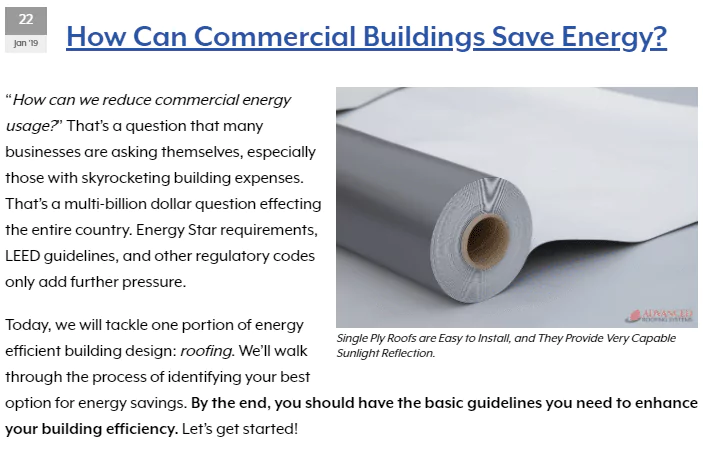
For example, energy efficiency provides the perfect introductory topic for metal roofing.


Metal Roofing Mentioned in a LEED Building Article

If your business hasn’t tried content marketing yet, it’s worth experimenting with.

Not only does it have value for your roofing SEO performance, but content marketing also requires negligible monetary investment on your company’s part.


Where to Invest Your Time (Plus Benefits)


  • Research and Data Studies – Original research and data studies to attract backlinks for SEO
  • Facebook Posts – promote popular stories with Facebook Ads later
  • Instagram Stories – share pictures of your latest metal roofing projects
  • YouTube Videos – explain the differences between types of roofing

Remember, content marketing doesn’t mean you never take the chance to promote your brand.

In fact, every Facebook post and YouTube video should link back to your website, where potential leads can move further through the buying funnel.

Of course, there are some more direct ways to promote metal roofing installation.


Direct Promotion via Website Content

As always, your greatest online marketing tool isn’t your Facebook Business account or paid ads. It’s your website.

Almost every digital marketing activity begins and ends with your company website. Ensuring that your site ranks well and continues to earn leads is the entire point behind SEO for roofers.

After Google’s Helpful Content Update, unique and original website content performs well on search results.


Direct Topic Promotion in Website Blog Post

Dig deep into the roofing category you’re trying to promote. Discuss what you love most about metal roofing and which brands provide the best value.

Just focus on providing valuable, insightful content that proves why homeowners (and businesses) should be interested. 

Of course, your website has many ways to promote metal roofing.


Top Promotional Activities


  • Embedded YouTube Videos
  • Infographics
  • Links to Related Consumer Publications
  • Research and Data Studies (i.e., blog posts)

Videos and other rich visual media typically provide the best results. They make the benefits of metal roofing feel more real than plain text.

These resources also make for great social media content later on.

Make such a strong impression that your company name automatically gets on a potential client’s list when they are ready to start the purchase process.


Late Stage Metal Roofing Promotion – Buying Intent

Earlier, we discussed the four key micro-moments consumers experience when searching online. We’ve talked about the first research-oriented moment.

Now we’re moving on to “I want to buy.” Consumers and businesses in this category have the highest levels of purchase intent, which is why roofing contractors struggle so fiercely to earn their attention.

If your business wants to thrive in the online marketplace, you’ll need to know how to capitalize on this user intent.


If you want to dominate in the “I want to buy” category, you’ll need to master three critical areas:


  • Organic Search Optimization
  • Paid Search Campaigns
  • Citations & Reputation Management

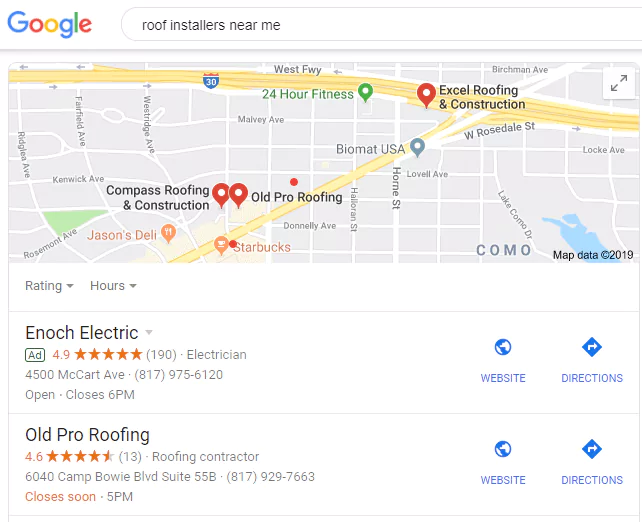
Few listings earn such incredible traffic as Local 3-Packs. Best of all, the conversion rate is high because of your associated reviews.


Roof Installers Search

Search Engine Optimization: Local Results

We’ve already discussed how important website optimization is for your long-term success. But what does an optimized website even look like?

Many metal roofers can benefit from hiring from one of the best roofing SEO companies. For roofers, website design elements include the company logo, calls to action, and navigation menu.

Don’t forget about the content within the pages themselves that drive results. You’ll need to ensure your pages are keyword-optimized to capture the best results for metal roofing prospects.


How to Optimize Content Keywords


  • Include local city and state additions to your focus keyword.
  • Sprinkle variations of your focus keywords throughout the pages.
  • Mention related roofing topics.
  • Don’t stuff your page with too many keywords.
  • Include related phrases in your image attributes.

Be sure all your service pages are neatly tucked under a handful of primary service categories.

After all, you don’t want people to skip your website because they can’t find your standing seam metal roofing page beneath the green roofing services.


Search Adverts for Metal Roofing: Paid Results

As you can imagine, the competition for metal roofing installation is extremely fierce regarding local Google results.

Organic (unpaid) keyword results can be challenging to come by, especially from brand-new roofing contractors. That’s why many companies choose to skip the competition through paid Google Ads.

These campaigns allow roofers to advertise their metal roofing services within a specified geographical radius, your service area.


These ads have several alluring advantages over traditional advertising.


  • They typically get top placement on Google results pages.
  • Roofers only pay when people click on their ads.
  • They come with contact information for the company.
  • The ads run on a strict budget they won’t ignore.

If your business only recently launched a website for the first time, Google’s paid ads offer a simple way to generate leads quickly.

Many roofing contractors experience a double return on their investment, something not every marketing service can offer.

While roofers should ultimately look to earn most of their business through organic search, paid ads are still a fantastic option for capturing buy-ready consumers.


Business Listings & Quality Reviews: Natural Results

At Roofers Guild, we’ve discussed how consumer perception can be improved by showcasing your company’s experience, authority, and trustworthiness.

That’s why large roofing companies advertise their OSHA safety standard compliance and other credentials.

The most essential indicator of trustworthiness, however, is client reviews. People trust online reviews almost as much as they trust recommendations from friends or family members


Where to Collect Reviews


  • Google Reviews
  • Facebook
  • Better Business Bureau
  • Yelp
  • Angi’
  • HomeAdvisor

These days, Google rewards broad collections from a variety of review sources. In other words, if all your reviews come in through Angie’s List (or even Google Reviews), they probably won’t have the impact you’d hoped for.

Try using a dependable WordPress widget to collect them all into your website for the best results. Ensure your roofing company is listed in Google My Business and as many other free citation sources as possible.


Closing Notes on Metal Roofing Promotion

Roofers rely on a wide variety of lead-generating activities for their ongoing growth. With so many consumers and businesses using Google Search and other engines to find their essential services, it only makes sense to pursue these leads online.

Learning the basics behind search engine optimization and paid ads is imperativeYou can use these principles for metal roofing or any other one of your services.

If you have any questions about how to promote metal roofing or your business in general, talk with one of our experts at Roofer’s Guild.


Guide to Hail Damage Roofing Storm Leads


Hail damage roofing leads are the golden ticket of the roofing industry. Roofing companies know that when an act of God produces the mother load, it can change the trajectory of your company.

While roofers cannot predict Mother Nature, they can put themselves in a position to benefit from her wrath.

You see, the beneficiaries of hail storms are only partially lucky. The other component of their fortune is foresight.

Establishing a digital marketing presence now lays the foundation for a flood of roofing leads after a hail storm.


Key Takeaway

Most hail damage leads go to roofing companies with an established local marketing presence (before the hail storm)


Hail Damage Roofing Leads (Blog Cover)

Below, Roofer’s Guild breaks down the nuance of hail damage leads and how to generate them.


Marketing For Hail Damage Roof Repair

Storm chasers have a negative connotation in the roofing industry both by their contemporaries and target customers.

When a hail storm ravages a community, residents turn to people they trust, NOT people they just met.

By marketing for hail damage roof repair today, you can become a pillar of your community when hail hits.


Here’s how to establish this marketing presence today:


  • E-E-A-T: Establish experience, expertise, authority, and trust within your community
  • Maintain Contact: Build a report with your clients through email marketing and local events
  • Generate Reviews: Ask satisfied customers to leave reviews on Google and Yelp
  • Stay Local: You can venture into surrounding areas but stay in the general area

Applying these methods will help you evade the cynical label of “storm chaser” while laying the groundwork for future hail damage roofing leads.

Storm chasers are considered untrustworthy because the work performed is often subpar, and the roof fails years later when the damage is no longer covered by insurance.

By this time, the roofers have moved on to other regions and are orchestrating similar schemes on unsuspecting communities.


Roofer's Guild Hail Damage Leads Keys For Contractors

Google Business Profile Optimization

Homeowners with hail-damaged roofs often first look at Google Maps and the Google Map 3-Pack, which shows reviews along with the business’s contact information.

Only roofers who have created, claimed, and optimized a Google Business Profile can appear with these results.

Google explains how to claim your Google Buisiness Profile here.

Remember that your business location, relative to the center of the city, plays a significant role in where your profile ranks. Additionally, businesses with the most reviews also have a ranking advantage.


Website Content Mentioning Hail Damage Roof Repair

It’s important that your official business website mentions hail damage roof repair as a service. Ideally, your website also features images of previous projects involving hail damage roof repair along with other roofing projects in your target service areas.


Hail Damage Website Mentions (Screenshot)

Marketing Work With Insurance Companies

When a homeowner files a claim, their property is inspected by an adjuster.

Because customers often have previous relationships with roofers they trust, they’ll ask that the roofer assess the damage before the adjuster’s inspection or during it.

As a roofing contractor, you should market that you will work with insurance companies so that they don’t miss any signs of damage on your client’s roof.

Ensuring your customer gets the fairest insurance claim establishes your company as reliable and trustworthy.


In addition to the most obvious areas of damage, professional contractors should pay especially close attention to more subtle areas:


  • Decking
  • Paint
  • Gutters
  • Siding

It’s not that the insurance adjuster is presumed incompetent; it’s just that they lack certain qualities that your consumers value most.

The first is the established relationship you have with your client. They simply trust your opinion more than the adjuster, especially because you are an impartial mediator in this process.

Secondly, adjusters often evaluate 8-10 roofs per day in areas recently hit by hail storms.

The fact is, this redundancy gets exhausting, no matter how good the person is at their job.

With this in mind, you shouldn’t take on the same workload as these adjusters because you want a clear mind to notice subtle damages that they might miss.


Email Marketing Strategies

Roofing companies can use an email marketing suite like Mailchimp to build a subscriber list with information about customers in hail-ridden areas.

Now, when a hail storm occurs in that area, your company can automatically email affected homeowners with discounts and offers.


Some of the ways to grow your email marketing list include:


  • Creating mandatory email fields on website CTAs and contact forms
  • Offering downloadable lead magnets in exchange for email address submissions
  • Running targeted social media ads with required email address fields

As your email list grows over time, your ability to capture a significant portion of homeowners requires hail damage, and roof repair will follow suit. Be sure to use tools like Mailchimp to ensure email segmentation and peresonalization.


Using PPC to Target Hail Storms

Targeting a hail storm with PPC ads is not unethical as long as you do great work and have established your company before promoting these services.

This is yet another reason to follow the guidelines outlined in this post.

As a roofer, image is 75% of the marketing game.

At Roofer’s Guild, we can tell you that the image of a successful roofer contains defined qualities that are almost universally accepted as favorable by the consumers, who, in this case, are local homeowners or building owners with roof problems.


The qualities include:


  • Brand Recognition: A defined image that is recognizable by the consumer
  • Trustworthiness: A level of trust clients have in you as their roofer
  • Local Visibility: An extension of brand recognition that is refined through a local lens

So, how does all of this tie into pay-per-click? It’s fairly simple. In today’s market, customers will almost always double-check business credentials before investing in them.

This means that even if you pay to be #1 on Google, a homeowner in need of hail damage repair clicks your website. They will STILL check your reviews before hiring you.


Ad Retargeting

PPC does not have to be limited to cold outreach. Platforms like Meta allow for retargeting campaigns that reengage with homeowners who’ve previously visited your website.

Using pixel tracking, roofing companies can show ads to website visitors who are more likely to convert than someone seeing their company for the first time.

For hail damage storm leads campaigns, roofers can track which visitors visited a page explicitly covering hail damage roof repair. This can increase conversions.


Ethical Considerations

No homeowner looks forward to a hail storm, but the fact of the matter is that they are part of a natural weather cycle. Having a roofer they can trust can be a stress alleviation for families. That’s exactly how you’ll want to brand your own company.

While insurance companies are often helpful, the opinion of a professional roofer can ensure that the process goes as smoothly as possible for the homeowner.

If you are their #1 resource for roofing, it will also be a representation on behalf of them. Building these kinds of trust levels with your clients is critical to netting hail damage repair jobs.


Final Verdict on Hail Damage Leads

Hail damage leads are legit, and branding your company as trustworthy can help you sustain these jobs whenever the weather strikes your general area. Avoid adopting the label of a storm chaser, as you can quickly become blacklisted in the digital age, where bad news travels at the speed of light.

PPC advertising can help you generate leads during time periods directly after severe hail storms. Because your company will already be established as competent and authoritative, people won’t think twice about using your service.


Becoming a Conklin Independent Distributor (Full Guide)


A Conklin Independent Distributor is a contractor who partners with Conklin to sell their products to consumers. By leveraging Conklin’s established brand equity and industry-respected products, self-employed roofers can grow their own businesses more effectively.


Steps to Becoming a Conklin Independent Distributor

  • 1) Find a Sponsor
  • 2) Choose an Account Type
  • 3) Select an Enrollment Package
  • 4) Complete the Distributor Agreement

Conklin Independent Distributor Guide (Cover)

How to Become a Conklin ID

Becoming a Conklin Independent Distributor is a multi-step process. Check out the details below:


Step 1: Find a Sponsor

Sponsors are essential to your success as a Conklin ID, as they can lend experience and expertise to help you navigate the challenges of the industry.

Visit https://www.conklin.com/conklindistributor/signup/index/, where you can find available sponsors by zip code, name, email, and distributor ID.

You may also connect with sponsors at conferences or through digital channels like social media.


Step 2: Choose an Account Type

Conklin offers accounts for both distributors and customers. To become an ID, you’ll want to choose the “Distributor” account package.


This package is for contractors who plan to:


  • Promote and Sell Conklin Products
  • Develop a Client Base
  • Assist Other Conklin Independent Distributors

Step 3: Select an Enrollment Package

Conklin offers seven enrollment packages for you to choose from. The “Standard Contractor” package is among the least expensive.


Check them out below:


  • Platinum Contractor Wholesale – ($3,999)
  • Premier Wholesale – ($2,499)
  • Standard Wholesale – ($1,999)
  • Premier Contractor ($1,399)
  • Premier Grower ($1,399)
  • Animal Products Package ($999)
  • Conklin Business Seminar ($999)
  • Standard Contractor ($999)
  • Standard Grower ($999)
  • Vehicle Products Package ($999)

Step 4: Complete the Distributor Agreement

You will then be prompted to complete a Distributor Agreement in which you will enter your personal information, including your name, address, social security number, and any tax exemptions.

After completing the form, you are brought to a checkout page where you can complete the process.


Benefits of Conklin Distribution

You might wonder why roofers choose to become Conklin distributors in the first place.. Below are the key components of Conklin Independent Distributors:


  • Direct Sales: IDs can sell Conklin products through multiple channels, both in-person and digital
  • Commissions: IDs can earn a percentage of generated sales and potentially bonuses and incentives
  • Flexibility: IDs can choose their sales and marketing techniques and hours of operation
  • Support: IDs receive detailed training, promotional materials, and access to a network of distributors

Maximizing Your Conklin Business


Many small-scale roofers would like to grow their businesses but lack the resources and accountability to realize that vision.

A great solution to this common predicament is Conklin Independent Distribution. Becoming an Independent Distributor (ID) allows you to earn instant credibility in your market and start profiting as a commercial roofer.

You will gain access to an expansive library of training material, as well as a management structure that encourages excellence.


https://youtu.be/9VJOmogzk4g?si=9Fy58gXsGBaQ3PmR

Establish a Service Area

Regardless of your current location, you can become an Independent Distributor.

From New York to Texas and Illinois to Louisiana, there’s opportunity available to anyone willing to take advantage. The most difficult part of launching a roofing company is earning credibility.

A large percentage of consumers will not trust unknown commodities, but affiliation with Conklin allows contractors to establish credibility on day one. This makes marketing much simpler and encourages growth at a much faster rate.


Sales and Marketing Strategies

Many contractors don’t have an official business but perform jobs based on word of mouth and friends of friends. Becoming a Conklin ID allows you to turn a side business into a legitimate company.

You might be surprised by how quickly an unknown contractor can increase their demand with a little help from Conklin.

There are so many untapped resources available to contractors throughout the United States, and the time is now to start capitalizing.


Ways to expand your roofing business include:


It would be a shame to waste a business opportunity with so much upside and very little downside. Roofers should view their status as an Independent Distributor as “playing with house money.”

If your business ends up failing, you risked very little in the process and can resume your previous work. Conversely, if you end up succeeding, your business will grow at a considerable rate, and you’ll have access to resources that help you handle the increased demand and workload.

Weighing risk vs. reward should help you arrive at the decision that best suits your vision.


Final Thoughts

Becoming a Conklin Independent Distributor can boost your business. By leveraging the Conklin brand and gaining accountability, you can reach goals that were otherwise improbable.

To learn more about Conklin and its ID program, we encourage you to visit: https://www.conklin.com/conklindistributor/signup/